

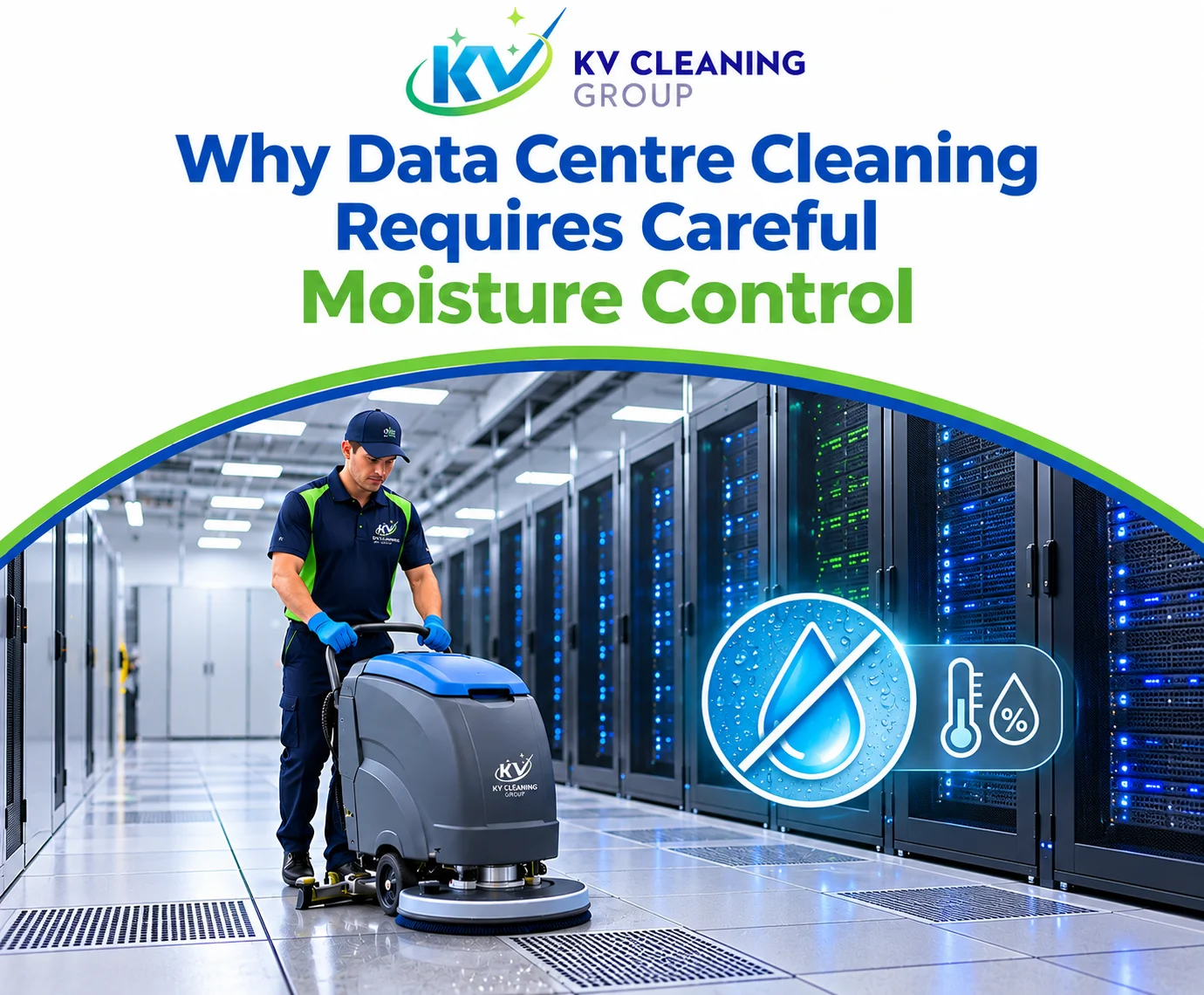
Why Data Centre Cleaning Requires Careful Moisture Control
Moisture is one of the most practical risks in data centre cleaning, and one of the easiest to overlook. A surface can look dry within minutes while liquid has already moved into a panel gap, cable entry or floor void. In a cooled environment, that moisture may remain for much longer than it would in an ordinary office.
This guide explains why moisture control matters during data centre cleaning, where the risk comes from and what facility teams should confirm before approving a cleaning method. It does not replace equipment manufacturer instructions or the facility's environmental monitoring procedures.
Why Moisture Deserves Attention in a Data Centre
Data centres are designed to manage heat, airflow and humidity within defined operating conditions. Cleaning can introduce water or cleaning solution into that environment in ways that are not always visible.
- Liquid can run along cables and enter equipment openings.
- Moisture can sit in floor voids, containment and insulation.
- Cooled air and restricted ventilation can slow drying.
- Residue from cleaning products can attract dust or affect surfaces.
- Wet floors create slip risks for staff working in a restricted space.
The concern is not that every droplet causes damage. The concern is that moisture is difficult to see, difficult to trace and capable of affecting equipment and services that are not designed to be wet.
Where Moisture Comes From During Cleaning
Sprayed products
Spraying towards a surface near equipment can send fine droplets into the air and onto adjacent surfaces. Applying product to a cloth first gives more control over where the liquid goes.
Over-wet cloths and mops
A cloth that is dripping, or a mop that leaves standing water, introduces more liquid than the surface needs. Excess moisture can be pushed into gaps and edges as the cloth or mop moves.
Floor washing near grilles and grommets
Perforated tiles, cable grommets and panel edges provide direct routes into the floor void. Water can pool at these points even when the surrounding floor appears dry.
Spills and leaks
A drink spill, a leaking pipe or a damaged seal can introduce moisture independently of cleaning. Cleaning staff may be the first people to notice the evidence.
Humidity and condensation
Moisture can also come from the environment rather than from a bucket. Condensation, high humidity or a failed seal may leave surfaces damp without an obvious spill. These conditions should be assessed by the responsible technical team, not treated as a cleaning problem.
Choosing a Method: Dry, Damp or Wet
Different surfaces and soils need different methods, but in a technical environment the default should be the least moisture that will do the job.
| Method | Typical use | Moisture control |
|---|---|---|
| Dry | Loose dust, low-lint wiping, accessible surfaces | No liquid applied; use dust-retaining tools |
| Damp | Approved hard surfaces with light soil | Cloth wrung out; surface dry within a short, agreed time |
| Wet | Only where the surface and facility approve it | Controlled application, isolation of openings, confirmed drying time |
| Specialist | Contamination or technical cleaning beyond routine scope | Defined method statement and authorised personnel |
For most data centre surface cleaning, a damp method with a well-wrung cloth is more appropriate than a wet method. The site should confirm which surfaces can tolerate any moisture at all.
Products and Dilution
Product choice affects both moisture and residue. A product that requires a heavy rinse may introduce more water than a low-residue cleaner, while an incorrect dilution can leave a sticky film that attracts dust.
- Use products approved for the surface and the environment.
- Follow the label dilution and contact time.
- Avoid mixing chemicals.
- Apply product to the cloth, not directly to equipment or openings.
- Keep safety data sheets available on site.
- Confirm whether the product leaves residue that needs removal.
Where a new product is proposed, a small test area and the facility's approval should come before wider use.
Spills and Leaks: What Cleaning Staff Should Do
A spill near equipment is not a routine mopping task. The cleaning team should stop, secure the area and report it to the responsible person.
- Do not use a wet vacuum near electrical equipment.
- Do not spray cleaning product onto or into equipment.
- Do not lift floor panels to investigate unless authorised.
- Keep people away from the affected area until it is assessed.
- Record what was spilled, where and when it was noticed.
If the spill is away from equipment and the facility confirms it is safe to clean, the team should use minimal moisture, isolate nearby openings and dry the area thoroughly. Any doubt about the path of the liquid should be escalated.
Humidity, Ventilation and Drying
Cleaning can temporarily affect local humidity, particularly where floors are washed or large areas are cleaned with wet methods. The facility's environmental monitoring should remain the authority on whether conditions are acceptable.
- Confirm whether the room's monitoring system has any active humidity alerts before work starts.
- Avoid introducing unnecessary moisture when the room is already humid.
- Keep doors and airflow paths as the facility requires; do not prop open controlled doors.
- Allow the agreed drying time before restoring access.
- Report condensation, damp patches or persistent humidity concerns.
If damp conditions persist, the cause may be a building or equipment issue rather than cleaning. Damp environments can also support mould growth on building surfaces. The NSW Health guidance on mould explains that moisture control is central to preventing mould, and that persistent dampness should be addressed at its source.
Drying and Handover Checks
The clean should not be signed off while surfaces are still wet or while access is restricted without warning. A simple handover check helps confirm the room is ready.
- Check that approved surfaces are dry to the touch.
- Confirm no water has pooled around grilles, grommets or panel edges.
- Check that wet-floor signs are removed only when the floor is dry.
- Confirm that cleaning equipment and waste have been removed.
- Record any dampness, staining or damage observed.
- Verify that the room has been returned to its normal access state.
Moisture Control Checklist
| Check | Confirmed by | Record |
|---|---|---|
| Approved method identified for each surface | Facilities and IT | Method statement |
| No active humidity or leak alerts | IT or operations | Pre-clean check |
| Spray application avoided near equipment | Cleaning supervisor | Site briefing |
| Grilles and cable entries protected | Cleaning supervisor | Pre-clean check |
| Drying time agreed | Facilities | Handover note |
| Any dampness reported | Cleaning team | Incident or observation log |
| Surface dry before access restored | Supervisor | Completion check |
Keeping Moisture Risk Under Control
Moisture control is mostly a matter of method and boundaries: use the least water that will do the job, keep liquid away from openings and services, allow proper drying time and escalate anything that looks like a leak or environmental problem.
These controls work best when they are part of the wider cleaning plan rather than an afterthought. The related guide on reducing cleaning risks around sensitive IT equipment covers dust, static and physical disturbance, while the server room cleaning checklist sets out the approvals and checks that should come first.
For site-specific support, review data centre cleaning services in Sydney and discuss the room's surfaces, access rules and moisture controls with the team before scheduling work.
Get Free Quote
Recent Posts


Frequently Asked Questions
Moisture can travel into cable entries, floor voids and equipment openings where it is difficult to see. Cooled environments and restricted ventilation can slow drying, and residue from cleaning products can attract dust. The risk depends on the amount of liquid, the surface and the equipment design.
Only where the facility has approved the method for the floor type and the moisture can be controlled. Wet mopping near perforated tiles, grommets and panel edges requires particular care because liquid can enter the floor void. A damp method is often more appropriate than a wet one.
No. Spraying can send droplets onto adjacent surfaces and into openings. Applying product to a cloth first gives more control and reduces the chance of moisture reaching equipment or cable entries.
Drying time depends on the surface, the method, airflow and room conditions. The facility and cleaning team should agree the time before work starts and confirm surfaces are dry at handover. Wet-floor signs should remain until the floor is safe.
Stop work, secure the area and report it to the responsible person. They should not lift floor panels, use a wet vacuum near electrical equipment or attempt repairs unless specifically authorised and trained.
Persistent dampness can support mould growth on building surfaces such as walls, ceilings and insulation. Moisture should be addressed at its source rather than cleaned repeatedly. The responsible facilities team should investigate ongoing dampness or humidity problems.