

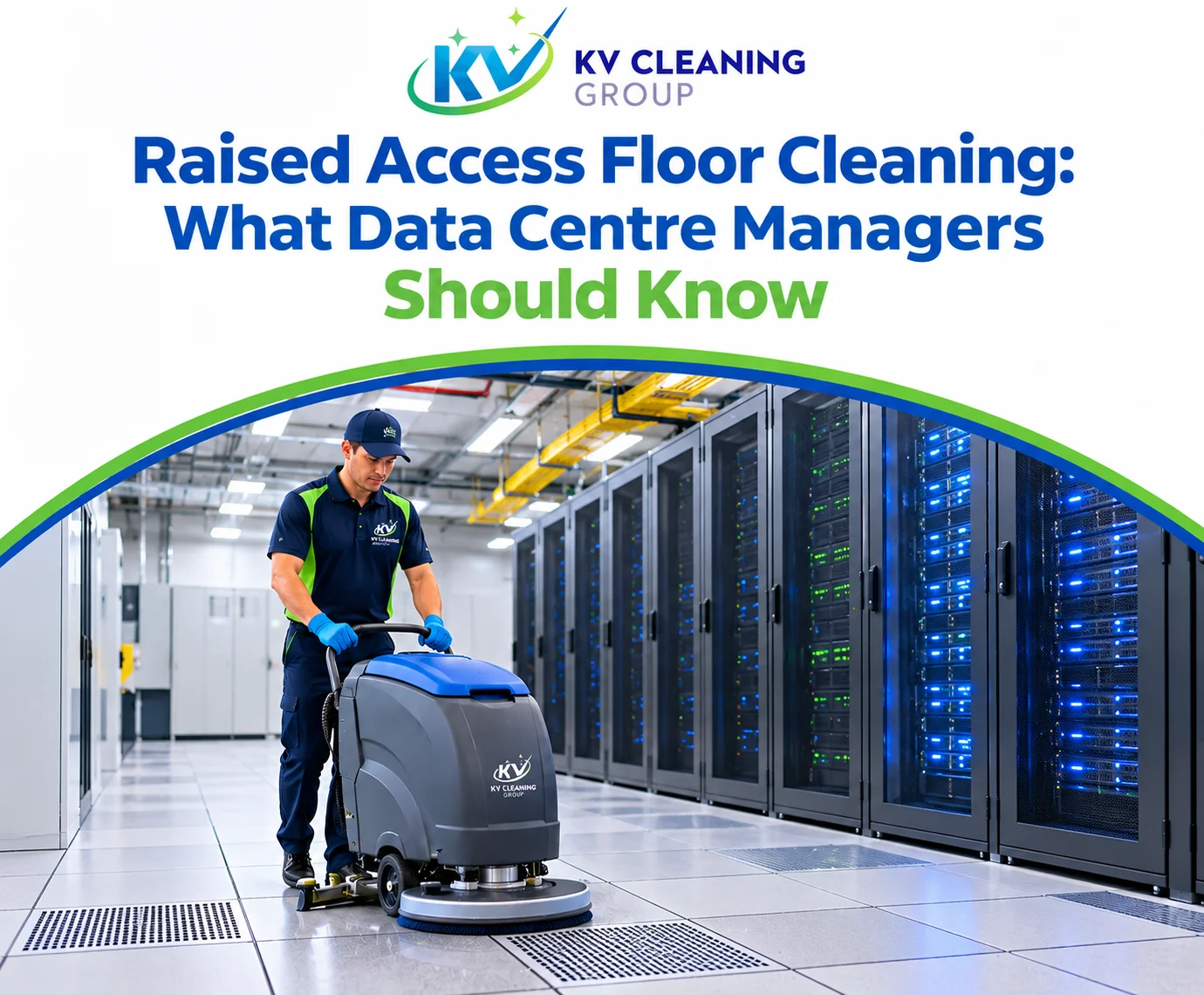
Raised Access Floor Cleaning: What Data Centre Managers Should Know
A raised access floor is not simply a floor that sits higher than a slab. It is part of the data centre's services infrastructure: it creates a void for cabling, cooling air and sometimes pipework, and its panels, seals and grilles affect how the room performs. Cleaning that treats the surface like an ordinary tiled floor can disturb airflow, cable routes and equipment protection.
This guide explains what data centre managers should know before arranging raised access floor cleaning, including panel handling, airflow, cable routes and moisture control. The focus is on planning and supervision, not on encouraging cleaning staff to perform technical work.
What a Raised Access Floor Does
Raised floors are common in data centres and server rooms because they allow services to run beneath the working floor. Depending on the design, the void may contain:
- Power and data cabling, including containment and cable trays.
- Cooling air delivered through the void and released through perforated tiles or grilles.
- Pipework, drainage, leak detection or fire suppression components.
- Sensors and monitoring equipment.
Because the floor is part of these systems, cleaning decisions can have effects beyond appearance. A lifted panel may expose cables; a displaced seal may change airflow; a wet mop may send moisture into the void; and a heavy load in the wrong place may stress a panel.
Why Raised Floor Cleaning Is Different
Panels are removable, not disposable
Most panels can be lifted for access, but they are not designed to be dragged, stacked carelessly or walked on when removed. A panel that is dropped or installed incorrectly may sit unevenly, damage a seal or create a trip hazard.
Airflow depends on the floor's condition
Perforated tiles, grilles and grommets are part of the cooling design. Blocking them with equipment, mats, boxes or cleaning waste can change airflow. So can a panel that is not reseated properly.
The void contains services that cleaning can disturb
Cables, containment, pipework and sensors may be sensitive to movement, moisture and dust. Cleaning staff should not move or reorganise these services as part of a routine clean.
Surface materials vary
Raised floor panels may have laminate, vinyl, powder-coated steel or other finishes. The appropriate cleaning method depends on the material, the manufacturer's guidance and the facility's requirements.
Checks Before Any Panel Is Lifted
Lifting a panel is an access activity, not a cleaning shortcut. Before any panel is removed, confirm:
- Who has authorised the lifting and who will supervise it.
- Which panels may be lifted and which must remain in place.
- What cables, pipes or services run beneath the area.
- Whether a cable map, service drawing or previous access record is available.
- Whether the work requires two people or a panel lifter.
- Where removed panels will be stored so they do not block egress, airflow or equipment access.
- How the panels will be reinstated and checked.
If the facility cannot confirm what lies beneath a panel, the area should not be opened for cleaning. The risk of disturbing an unidentified service is not worth the benefit of cleaning a small section of void.
Cleaning the Floor Surface
Routine surface cleaning should be planned around the floor type and the room's airflow. A few practical rules apply in most data centre environments:
- Use a method that captures dust rather than pushing it towards grilles or equipment.
- Do not flood the floor or allow liquid to pool around perforated tiles, grommets or panel edges.
- Apply cleaning solution to a cloth or mop rather than spraying towards the floor void.
- Keep mats, bins and equipment clear of airflow tiles.
- Allow treated surfaces to dry before access is restored.
- Inspect panel edges, grommets and seals for damage as the area is cleaned.
Where a wet method is approved, the amount of moisture should be controlled and the drying time confirmed. Moisture can travel through gaps that are not visible from above. If the room has had a spill, leak or high humidity event, the void should be assessed before routine cleaning resumes.
Cleaning Beneath Panels
Cleaning inside the floor void is a separate scope from surface cleaning. It may include removing loose debris, cleaning containment surfaces or addressing a specific contamination issue, but it should only proceed when the facility has approved it.
Controls for under-floor work include:
- Using equipment with appropriate filtration and avoiding compressed air.
- Keeping cleaning tools away from cables, connectors and pipework.
- Not moving, re-routing or disconnecting services.
- Working in small sections so the void is not left open unnecessarily.
- Reinstating each panel and seal before moving to the next section.
- Recording any damaged cable, damp patch or loose containment found during the work.
Under-floor cleaning should not be treated as a task for general cleaning staff unless the facility has specifically trained and authorised them for it. For many sites, the safer approach is to separate surface cleaning from technical void access.
Managing Dust and Airflow During the Clean
Dust disturbed during cleaning can move with the room's airflow. That is why the sequence of work matters. Cleaning higher surfaces before floors, and working away from equipment intakes where possible, reduces the chance of particles being drawn into the cooling path.
- Confirm which airflow tiles and grilles must remain unobstructed.
- Avoid dry sweeping near perforated tiles.
- Do not use compressed air to clear debris from panel edges or the void.
- Keep waste bags sealed and away from intakes.
- Check that panels are level and seals are intact before handover.
If dust returns quickly after cleaning, the cause may be outside the cleaning scope. Construction activity, damaged filters, door sealing or airflow imbalance may need investigation. The related guide on dust around server racks explains how to record and escalate recurring contamination.
Moisture and Spill Response Under the Floor
Water beneath a raised floor can affect cables, containment, pipework and leak detection. It may also be difficult to see from the surface. A spill should not be wiped away at floor level without checking whether liquid has entered the void.
- Stop work and report any visible dampness, staining or pooling near panel edges.
- Do not lift panels to investigate a leak unless authorised and trained to do so.
- Keep the area clear while the responsible team assesses the source.
- Record the location and time of the observation.
- Do not resume cleaning until the area has been cleared for use.
Raised Floor Cleaning Do and Do Not
| Do | Do not |
|---|---|
| Confirm authorisation before lifting panels | Lift panels to clean beneath them without approval |
| Use low-moisture methods on approved surfaces | Flood the floor or spray towards grilles and grommets |
| Keep airflow tiles clear | Place bins, mats or equipment over perforated tiles |
| Record damage, dampness or loose containment | Move or reconnect cables to make cleaning easier |
| Reinstate and check each panel | Leave panels open or stacked in walkways |
| Follow the facility's access and ESD rules | Use household equipment not approved for the room |
Reinstatement and Handover
The clean is not finished when the last surface is wiped. Panels must be reseated, seals checked and the floor inspected for movement, level differences or damaged edges. Any panel that does not sit correctly should be reported rather than forced into place.
A short handover check should confirm that airflow tiles are unobstructed, access routes are clear, waste has been removed and any observations have been recorded. For facility managers, this is also the point to confirm that the cleaning boundary has been respected. The server room cleaning checklist provides a broader pre-clean framework that can be used alongside this guidance.
If the scope includes the surrounding technical environment, review data centre cleaning services in Sydney and discuss the floor type, access rules and supervision requirements with the team before work is scheduled.
Get Free Quote
Recent Posts
Frequently Asked Questions
Only where the facility has approved the method for the panel finish. Moisture should be controlled so it does not pool around panel edges, grommets or perforated tiles. Liquid can enter the floor void through small gaps, so drying time and access restrictions should be confirmed before work starts.
Panels should only be lifted by people authorised by the site, using appropriate tools and supervision. Lifting a panel can expose cables, pipework and sensors. Cleaning staff should not open the floor void unless the facility has specifically approved and trained them for that work.
Perforated tiles, grilles and grommets are part of the cooling design. Blocking them with mats, bins or equipment, or failing to reseat panels and seals correctly, can change airflow. Cleaning should keep airflow paths clear and reinstate every panel properly.
Under-floor cleaning is a separate scope from surface cleaning. It should only proceed with facility approval and appropriate controls for cables, containment and filtration. General cleaning staff should not move or reconnect services.
The area should be reported to the responsible team and left clear while the source is assessed. Cleaning staff should not lift panels to investigate a leak unless authorised. Moisture near cables and services should be treated as a technical issue, not a routine cleaning task.
Each panel should sit level, with seals intact and no movement or trip hazard. Airflow tiles should be unobstructed and walkways clear. Any panel that does not fit correctly should be reported rather than forced into place.