Terminal-Adjacent Public Areas
Maintain approved floor areas, accessible glass, seating surrounds and general touchpoints in commercial spaces connected to passenger activity.

An airport is more than a passenger terminal. It brings together busy public spaces, airline and airport offices, staff facilities, retail tenancies, amenities and operational support areas. Each space has a different cleaning pattern, access arrangement and level of daily use. KV Cleaning Group provides commercial cleaning in Sydney for workplaces, with airport-related enquiries assessed according to the premises, authorised work areas and site requirements. You can also review our commercial cleaning services to understand the wider range of facilities we support.
Whether you manage an office near Sydney Airport, a commercial tenancy in the Mascot precinct or a facility used by airport-related staff, the cleaning plan should reflect how people move through the site. Passenger-facing areas, back-of-house offices and staff amenities should not be treated as one identical task list. Terminal or restricted-airside work is subject to the airport operator's engagement, induction and access arrangements.
Separate public-facing areas, office zones, staff amenities and operational spaces.
Discuss cleaning times around business hours, shift changes and approved access.
Match equipment and products to floor finishes, touchpoints and surface instructions.
Set out included areas, exclusions, service frequency and reporting contacts.
Cleaning requirements vary between a public reception area and a staff-only workplace. The following areas can be considered where the property owner, tenant or airport operator authorises the work and confirms access.
Maintain approved floor areas, accessible glass, seating surrounds and general touchpoints in commercial spaces connected to passenger activity.
Clean work areas, meeting rooms, reception desks and shared office spaces while leaving confidential papers and personal equipment undisturbed.
Attend to approved break rooms, tables, kitchen benches, sinks, accessible floors and shared staff amenities.
Clean toilets, basins, mirrors, dispensers and floors with designated cloths and products to reduce cross-use between zones.
Maintain approved shop floors, counters, customer waiting spaces and staff areas according to each tenant's trading hours.
Clean administration areas, meeting rooms, lunchrooms and office floors associated with freight or logistics operations.
Remove tracked-in soil, clean accessible door glass and maintain clear walkways in agreed building and tenancy areas.
Clean reception counters, customer seating, office floors and staff amenities where these premises fall within the agreed service scope.
Consider office suites, training rooms and other airport-precinct workplaces based on occupancy, access and the tasks required.
A useful cleaning brief identifies who uses each space, when it is accessible and what the cleaner is permitted to do. For broader property requirements, see our facility cleaning services in Sydney.
Record the suburb, floor area, levels, floor finishes, public and staff zones, washrooms and any high-use spaces.
Discuss sign-in, induction, keys or access cards, permitted hours, escort arrangements and areas that must remain excluded.
Agree the visit schedule, task checklist, consumables, product approvals and the contact for reporting issues or incomplete work.
Floor area is a useful starting point, but it does not determine the workload by itself. A 300 m² office with several washrooms, a reception and a busy lunchroom may need a different task allocation from a 300 m² open-plan office with limited shared facilities.
For early planning only, a small airport-related office or tenancy might be around 100–300 m², a medium workplace around 300–800 m², and a larger office or shared facility around 800–2,000 m² or more. These are illustrative scope-planning bands, not measured KV Cleaning Group projects, industry averages, fixed service limits or a promise of cleaning time.
For a more useful estimate, identify the actual cleanable area rather than the entire building footprint. Note the number of levels, washrooms, carpeted and hard-floor zones, staff facilities, public access areas and any rooms that require separate authorisation.
Discuss Your Facility SizeKV Cleaning Group describes its experience across a range of commercial premises. Company-wide figures should be treated as general business information, not airport-specific contract results or independently audited performance measures. Learn more about KV Cleaning Group.
Company-reported experience across commercial cleaning and workplace maintenance.
A reported project count across the wider business, not airport contracts alone.
Reported team size across the company; staffing for a site depends on its agreed scope.
A company-wide figure for broader cleaning activity, not the area of an airport facility.
A reported annual business figure across the company's wider client base.
Airport access, inductions, insurance evidence and any required clearances must be confirmed for each engagement.
Airport-related premises can include polished hard floors, carpet, glass, stainless steel, laminates, washroom fittings and electronic equipment. A single chemical should not be used on every surface. Product selection should follow the facility's approved chemical list, the product label, Safety Data Sheet (SDS) and manufacturer instructions.
A pH-neutral or floor-compatible cleaner may suit approved sealed tile, vinyl or similar hard floors. Follow the dilution instructions, control moisture and use only on compatible finishes.
Use disinfectant only on surfaces for which it is approved. Follow the stated contact time and confirm compatibility before using it on counters, coated surfaces or shared touchpoints.
Select a compatible cleaner for glass partitions, doors and metal finishes. Apply it to a cloth where appropriate instead of spraying near screens, access readers or other electronics.
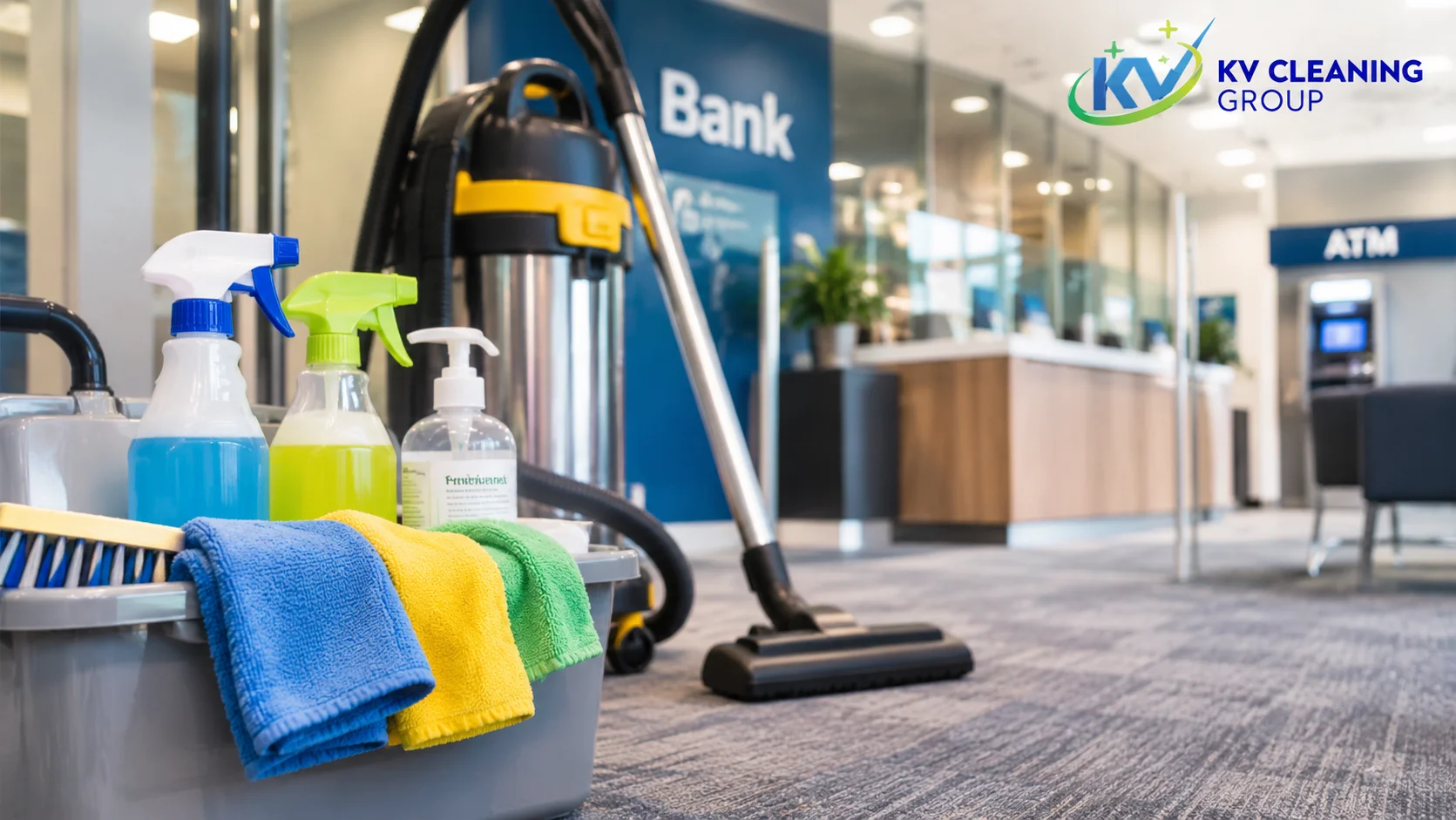
Use clean cloths for separate zones and suitable vacuum equipment for carpet and entry matting. Keep cords, machines and cleaning carts clear of passenger and staff routes.
Never mix cleaning chemicals, transfer products into unlabelled containers or spray liquids near exposed electronic equipment. Keep current SDS information available and follow the site's chemical handling and storage procedures. SafeWork NSW guidance on hazardous chemicals explains workplace chemical risk controls.
Cleaning frequency depends on occupancy, passenger or visitor movement, operating hours, weather, floor type and the presentation standard required. High-use areas may need more regular attention than low-occupancy offices. Periodic tasks should be planned separately from each routine visit.
Tasks agreed for each visit to maintain approved customer-facing, office and staff areas.
Additional work scheduled separately for areas requiring more detailed maintenance.
Airport premises may have separate access, induction and security requirements. The operator, tenant or facility manager determines which areas a contractor may enter and what evidence is required. Cleaning should only proceed within the approved scope and confirmed capability.
Establish whether the work is for an airport tenant, a commercial office or an airport-operated area. Confirm the responsible site contact and required induction before scheduling.
Mark airside, sterile, security-controlled, baggage, technical and other restricted spaces as excluded unless the relevant authority expressly approves access and procedures.
Agree permitted work windows, passenger or staff routes, equipment storage, spill reporting and handover arrangements with the authorised contact.
Practical answers for facility managers, airport tenants and businesses operating near Sydney Airport.
The scope depends on the premises and access approval. It may include office floors, reception areas, staff rooms, washrooms, shared corridors, accessible glass, approved touchpoints and general waste removal. Terminal, airside and restricted-area work requires separate engagement and authorisation.
Terminal cleaning can only be undertaken where the airport operator or an authorised tenant engages the provider and confirms the required access, induction and scope. Contact KV Cleaning Group with the facility details so the nature of the request can be reviewed. Do not assume access to operator-controlled areas.
Cleaning windows can be discussed around the site's operating hours, shift patterns and access conditions. Early morning, evening or weekend work depends on the premises, approved entry arrangements and staff availability. The final schedule should be confirmed with the authorised site contact.
Aircraft cabin cleaning is a specialist activity with aircraft-specific procedures and operator requirements. It is not included as a standard commercial facility-cleaning task. Please contact KV Cleaning Group to clarify your requirement and whether it falls within the services and capability available for the engagement.
The suitability of a site depends on its cleanable area, layout, task list, frequency, staffing and access arrangements. Small office tenancies may be around 100–300 m², medium sites around 300–800 m² and larger facilities 800–2,000 m² or more as illustrative planning bands only. A site review is needed to define the actual scope.
Product selection depends on the surface, facility rules and approved chemical list. A compatible neutral floor cleaner may be used on suitable sealed floors, while approved disinfectants and glass cleaners are selected for their intended surfaces. Product labels, SDS information and manufacturer instructions should always be followed.
Enquiries for airport-related offices, staff amenities and commercial support facilities can be discussed. The cleaning brief should identify the property location, areas included, access arrangements, work hours and any operational restrictions.
Do not assume a particular clearance, ASIC card, police check or airside authorisation is included. The airport operator or tenant must specify the requirements for the site, and KV Cleaning Group must confirm any applicable arrangements before the work is accepted.
Provide the suburb or facility location, approximate cleanable floor area, number of levels, property type, included rooms, floor finishes, washrooms, preferred schedule, service frequency and access or induction requirements. A floor plan or site photos may help explain the areas involved.
Multiple locations can be reviewed as a group, but each site should have its own access notes, task list, floor-area details and schedule. A shared reporting format may help management while allowing the work plan to reflect each property's actual use.
Tell us where the premises are located, the approximate cleanable floor area, which rooms are included, your preferred cleaning window and any access or product restrictions. KV Cleaning Group can review the details and discuss whether the requested work fits the available service scope. You can also explore our office cleaning services or warehouse cleaning services for related workplace requirements.
Call our team or send an enquiry with your site details.
KV Cleaning Group provides reliable commercial cleaning services for offices, warehouses, retail spaces, medical facilities and other workplaces across Sydney.
Our team works around your site requirements, cleaning schedule and access needs to help maintain a clean, safe and professional workplace. Contact us to discuss the right cleaning solution for your business.