
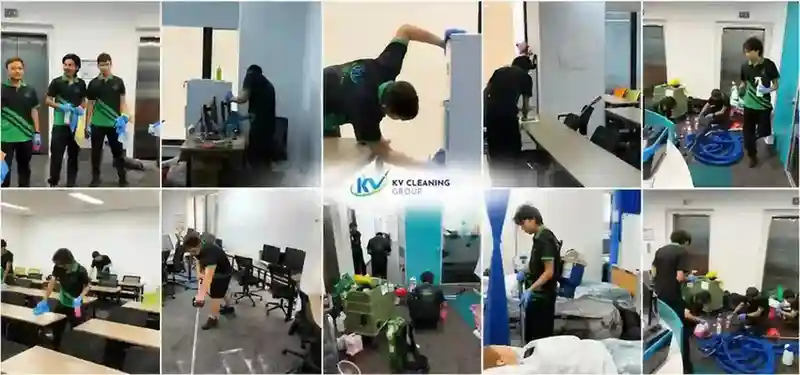

A useful cleaning arrangement should be easy to understand, realistic to manage and suited to the way people use the building.
Established in 2004, KV Cleaning Group works with Sydney businesses and property teams that want clear communication and a well-defined service arrangement. We discuss the building’s use, access conditions, busy periods and priorities so the proposed work can reflect the way the site operates.
KV Cleaning Group publishes 22+ years of industry experience, 525+ commercial projects, 126+ businesses served annually, 1.2M+ square metres cleaned, 43+ trained cleaning professionals and a 98% client retention rate. These are company-reported figures. If your organisation has procurement requirements, ask us for the relevant supporting documents and confirm that they meet your internal standards. We do not describe the business as ISO-certified on this page; any certification should only be claimed where current documentation supports it.
The service portfolio includes specialist options for different settings. An office may prioritise reception, meeting rooms and shared amenities, while a warehouse may have different access and floor-care needs. Read more about office cleaning in Sydney or warehouse cleaning for details relevant to those workplaces. Use the service links below to review the relevant page rather than relying on a broad company overview to answer every technical question.
Before work begins, the team can discuss site access, priority areas, operating hours and the communication process for any changes. The agreed written scope should make clear which tasks are included, how often they are scheduled and how site-specific requirements will be handled.
The goal is simple: understand the site, define the scope, choose suitable methods and keep the cleaning arrangement practical for the people who manage the property.

An office, warehouse, clinical setting and shared property do not have identical needs. Use these options to find the information most relevant to your premises.
This page introduces our company and the types of workplaces we support. Each linked service page has its own detailed scope, so you can move to the relevant page for service-specific information rather than reading the same description in several places.
Cleaning plans for workstations, reception areas, meeting rooms, kitchens, amenities and shared office spaces.
View Office CleaningPractical cleaning for large floor areas, access paths, storage zones, amenities and operational spaces.
View Warehouse CleaningCleaning support where production areas, equipment zones, heavy soil or hard-floor requirements need closer attention.
View Industrial CleaningCleaning for clinical and support areas, with hygiene procedures and facility requirements considered as part of the scope.
View Medical Centre CleaningRoutine care for shared entrances, lobbies, lifts, corridors, waste areas and common facilities.
View Strata CleaningCleaning support for fitness facilities, including equipment areas, floors, change rooms and heavily used touchpoints.
View Gym CleaningUse these starting prices as an initial guide when planning your budget. The final quote depends on site size, condition, access, frequency and the tasks agreed in writing. Prices and availability should be confirmed with KV Cleaning Group before booking.
From $99 per visit
A starting point for routine upkeep of work areas and shared facilities. The agreed scope may vary with staff numbers, floor area and how often the site is used.
From $99 per visit
Pricing depends on shop size, customer traffic, display layout and the time available to clean before opening or after closing.
From $119 per visit
The scope needs to reflect room use, facility procedures, access restrictions and any specific hygiene requirements supplied by the centre. See our medical centre cleaning service for related details.
From $129 per visit
The proposed visit should account for the centre’s layout, operating schedule, washrooms and the cleaning requirements for children’s areas.
From $129 per visit
Costs depend on equipment quantity, member traffic, flooring, change facilities and the cleaning window available.
From $149 per visit
A school quotation should account for the number of rooms, student occupancy, shared facilities, access times and any site procedures.
From $179 per visit
Floor area, storage arrangements, operational traffic, safe access and the condition of amenities all affect the scope.
From $219 per visit
A site review is important where production activity, restricted zones, equipment surroundings or workplace safety rules affect the work.
From $119 per visit
The price depends on the number of shared areas, floors, lifts, entrances and the frequency required by the property manager. Learn more about strata cleaning in Sydney for common-area requirements.
From $180 per visit
Dining areas, service hours, surface types and the level of grease or food residue help determine the agreed work.
From $149 per service
Glass quantity, height, access method and the difference between internal and external panes affect the quotation.
From $3.00 per m²
The final rate can vary with carpet condition, furniture, stains, access and the total area to be treated.
From $2.50 per m²
Surface material, soil build-up, drainage and access should be checked before confirming the method and price.
From $4.50 per m²
The price depends on the condition of the premises, the areas included and whether high-level or difficult-to-reach work is required.
For recurring visits, the rate can change with frequency, site size and the agreed scope. The guide below reflects the contract options supplied for this page; confirm eligibility and the final saving in your written quotation before relying on a percentage.
| Cleaning frequency | Indicative saving | Often suited to |
|---|---|---|
| Daily — 5–7 days per week | Up to 40% off | High-traffic offices, retail and medical centres |
| 5 days per week — Monday to Friday | Up to 20% lower | Corporate offices, schools and warehouses |
| 3 days per week — Monday, Wednesday and Friday | Competitive rates | Smaller offices and retail sites |
| Weekly — once per week | Standard rates | Lower-traffic workplaces and strata properties |
| Fortnightly — once every 2 weeks | Quoted for the site | Sites needing less frequent maintenance |
For multi-site contracts or larger facilities, ask about a combined proposal. Share each site’s suburb, floor area, operating hours, access requirements and preferred schedule so the team can assess the work consistently.
Request a Site-Specific QuoteCompare proposals by the work they include, the schedule they commit to and the way service issues will be handled—not by the headline price alone.
Start by giving each provider the same site information: approximate floor area, number of rooms and floors, surface types, busy periods, access restrictions and preferred cleaning times. This makes it easier to compare quotations against the same requirements instead of comparing different assumptions.
Check that each proposal separates routine tasks from periodic work and clearly states what is excluded. Confirm whether consumables are included, how keys or alarms will be managed, who can approve changes and how additional work will be quoted. These details help prevent misunderstandings once service starts.
Ask how the provider checks completed work and records feedback. A useful process identifies the person responsible for reporting an issue, the expected response process and how a missed task will be followed up. For sites with special operating or safety requirements, request the relevant training, insurance or procedure documents before agreeing to the scope.
Product handling should match the surfaces and tasks involved. Review the manufacturer's instructions and the site's work health and safety procedures, and never mix cleaning chemicals. Safe Work Australia explains safety data sheets and their role in safe chemical handling.
Before choosing a provider, make sure the written quotation lists the areas covered, tasks per visit, frequency, service window, periodic work, consumables, exclusions and quality-check process. Ask for clarification wherever the proposal is vague, and keep the agreed scope available to the people managing the site.
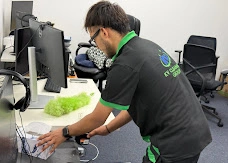
Workstations, meeting rooms, kitchens and shared spaces often need different attention based on occupancy and the hours the office is used.
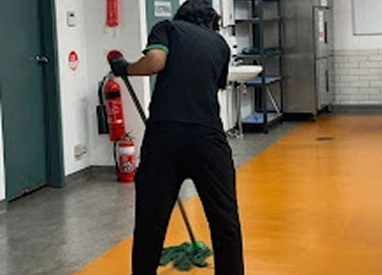
Floor type, foot traffic and soil levels help determine whether vacuuming, damp mopping or a more intensive floor-care process is suitable.
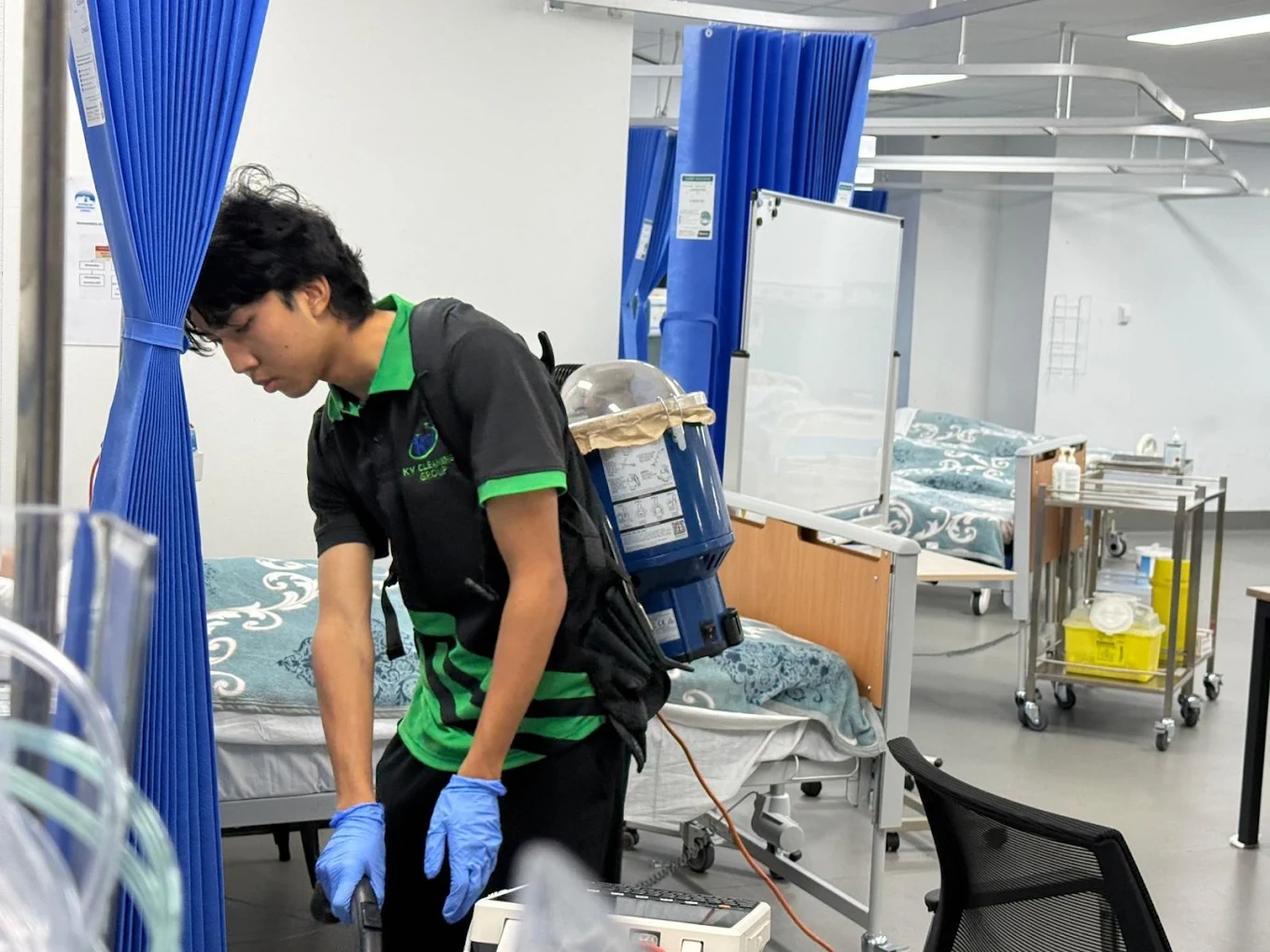
Cleaning routines should reflect the room's purpose, the facility's hygiene procedures and any site-specific infection-control requirements.
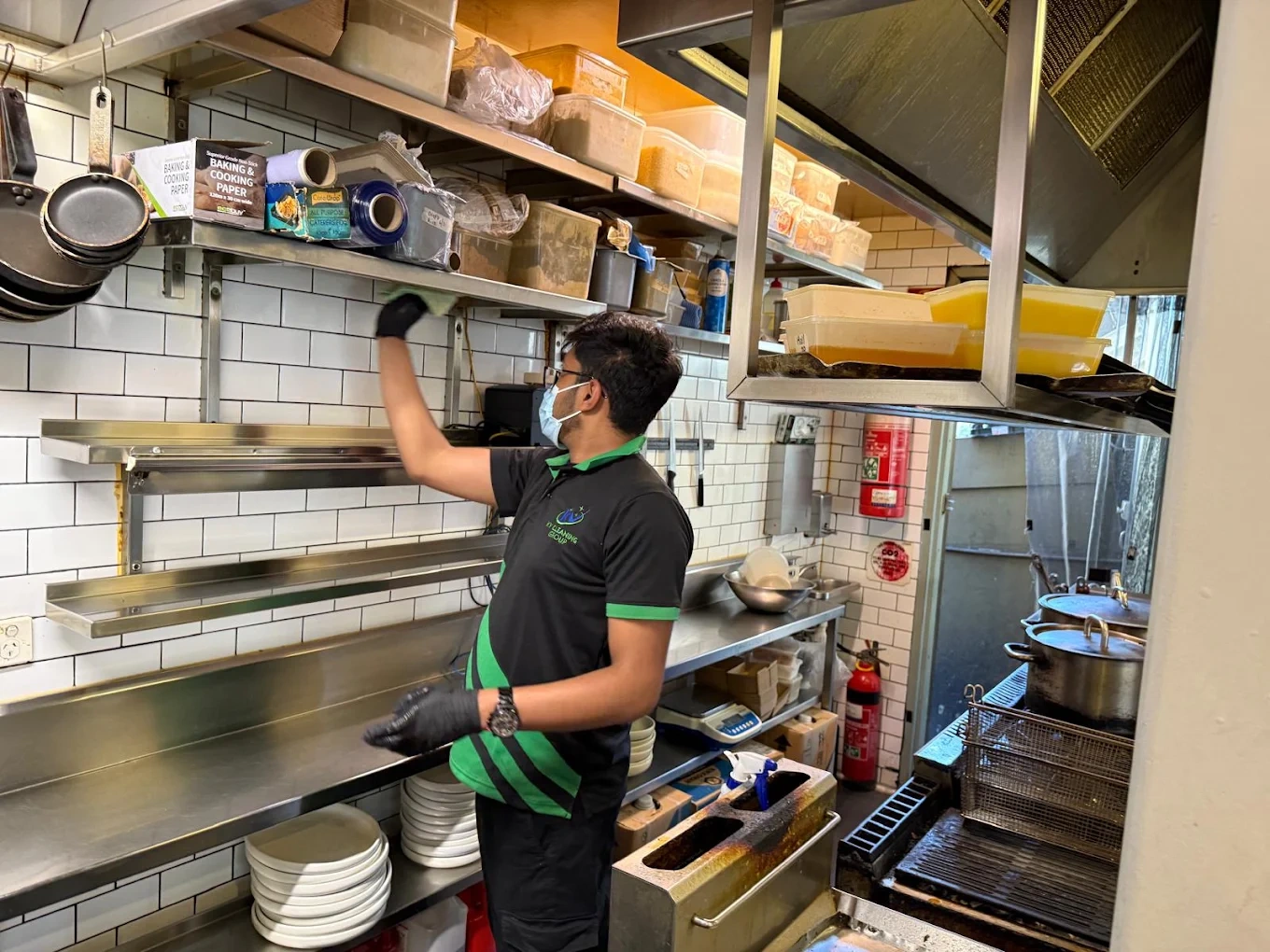
Food residue and grease need methods suitable for the surface and facility rules, with loose debris removed before wet cleaning where appropriate.
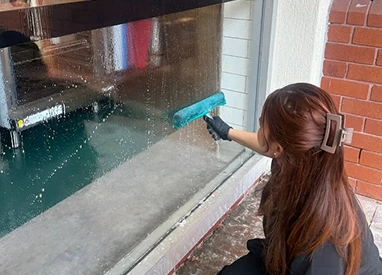
Glass and partitions need a surface-compatible product and careful application to remove fingerprints, smears and residue.
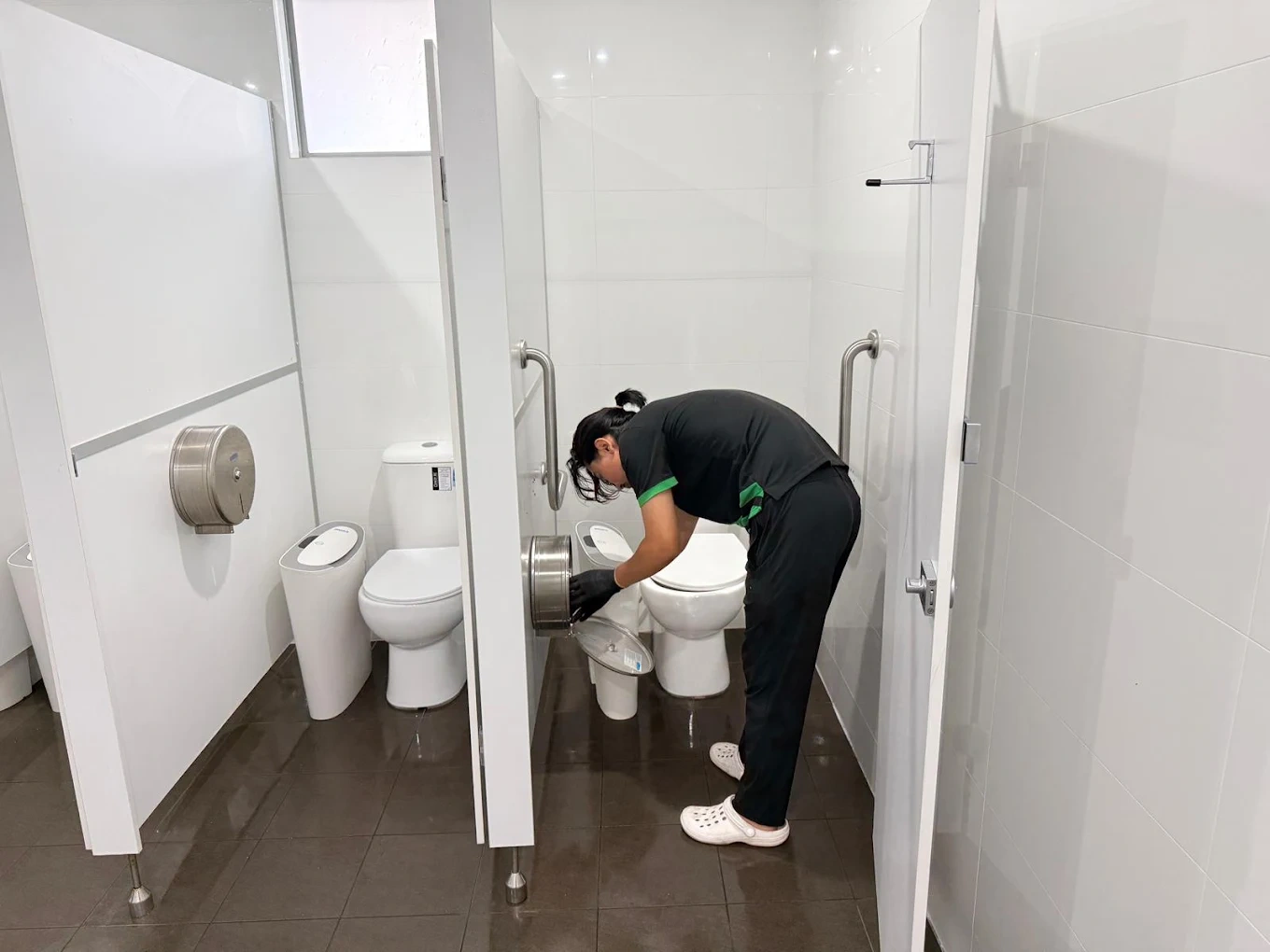
Bathroom routines can include fixtures, floors, touchpoints, bins and the agreed checks for soap or paper consumables.
KV Cleaning Group begins with the requirements of the individual site, then works with the client to establish a practical cleaning arrangement.
Since 2004, the company has supported different business environments with cleaning arrangements shaped around the building, access conditions and operating schedule. The details are discussed before the scope is confirmed, so the proposed work can reflect the site's priorities rather than relying on a generic checklist.
KV Cleaning Group reports 525+ commercial projects, 126+ businesses served annually, 1.2M+ square metres cleaned, 43+ trained cleaning professionals and a 98% client retention rate. These are company-reported figures. Organisations that need supporting evidence for procurement can request the relevant documentation and verify that it meets their requirements.
Established in 2004, with more than two decades of cleaning industry experience supporting different commercial environments.
Cleaning can be planned around opening hours, access conditions, quieter periods and the routine of the workplace.
Requirements, changes, periodic tasks and service feedback should be easy for the people managing the property to discuss.
A clear scope helps everyone understand which areas are routine, which tasks are periodic and what the quotation covers.
Cleaning requirements can change when a business relocates, expands, changes operating hours or adds another site.
Businesses and organisations across Sydney work with KV Cleaning Group for ongoing workplace cleaning support.






KV Cleaning Group is a Sydney cleaning company whose published service portfolio focuses on business premises and workplaces, including offices, warehouses, industrial workplaces, medical centres, strata properties, retail environments, gyms, restaurants and schools. The work and availability should be confirmed for the individual site.
Share the site suburb, approximate floor area, type of workplace, operating hours, access arrangements, main rooms or zones, preferred frequency and any periodic tasks. These details help the team understand the request; the proposed scope and price still need to be confirmed.
Cleaning times can be discussed around the site's opening hours and access rules. Before a schedule is agreed, confirm key collection, alarm or security procedures, restricted areas, building rules and the available cleaning window.
Planning discussions can cover a compact 60 m² office, a 250 m² workplace, a 1,000 m² warehouse or a 2,000 m²-plus facility. These are examples, not fixed service bands or a promise about cleaning time or price. Layout, surface types, room count, traffic and access also affect the proposed scope.
Product selection depends on the surface, soil and task. Depending on the site, suitable options may include a floor cleaner, glass cleaner, general surface cleaner, washroom product, degreaser or disinfectant for specified touchpoints. Labels, dilution directions and safety data should be followed, and chemicals must not be mixed.
Changes to a workplace, access window, occupancy or priorities can affect the original scope. Ask how proposed changes will be discussed, approved and reflected in the schedule or quotation before work is varied.
Compare the written scope, visit frequency, tasks per visit, periodic work, access requirements, consumables, exclusions, quality checks and the process for reporting a missed task. Also request any insurance or training documents your organisation requires and verify them directly.
Ask how the agreed scope will be checked, who will handle feedback and what happens when a task is missed. KV Cleaning describes training, quality checks, site inspections and service follow-up as part of its approach; confirm what checks and records will apply to your particular site.
Tell us the suburb, type of premises, approximate floor area, preferred cleaning times and the areas that matter most to your team. This gives us a practical starting point for confirming the service options available for your site and the next steps.
Ready to discuss the property? Share the location, approximate size and preferred schedule with the team.
KV Cleaning Group provides reliable commercial cleaning services for offices, warehouses, retail spaces, medical facilities and other workplaces across Sydney.
Our team works around your site requirements, cleaning schedule and access needs to help maintain a clean, safe and professional workplace. Contact us to discuss the right cleaning solution for your business.