

Why Commercial Cleaning Requires Trained Professionals
Keeping a commercial workplace clean involves much more than removing visible dirt and emptying bins. Different buildings contain different surfaces, equipment, traffic patterns, hygiene requirements and operational risks. A cleaning method that works well on one surface may be unsuitable for another, while incorrect chemical use or equipment handling can create avoidable problems.
This is why businesses often benefit from working with Professional Commercial Cleaners Sydney who understand how to clean commercial environments systematically and safely.
Trained cleaning staff know how to follow established procedures, select suitable products, operate commercial equipment, work around occupants and identify areas that require additional attention. Their role is not simply to make a workplace look clean. It is to maintain consistent cleaning standards while protecting surfaces, supporting workplace hygiene and working safely around employees, customers, visitors and building assets.
What Makes Commercial Cleaning Different From Basic Cleaning?
A commercial facility can contain offices, reception areas, meeting rooms, kitchens, bathrooms, corridors, lifts, storage areas and other shared spaces. Each area may require a different cleaning approach.
For example, a hard floor may require routine sweeping and mopping, while carpeted areas may need vacuuming and periodic extraction. Glass surfaces require appropriate cleaning methods, while stainless steel, timber, tiles and other finishes can respond differently to chemicals and equipment.
Commercial cleaning also has to work around the way a business operates.
Cleaning may need to be completed before employees arrive, after the working day, during scheduled access periods or in stages while a facility remains occupied. Staff therefore need to understand not only cleaning techniques but also workplace procedures, access requirements and safe working practices.
Why Trained Commercial Cleaners Matter
Training creates consistency.
Without a defined method, two cleaners may approach the same task differently. One may use too much chemical, another may overlook high-touch areas, while another may use unsuitable equipment for a particular surface.
Trained cleaners are more likely to follow established procedures covering:
-
Chemical selection and dilution
-
Equipment operation
-
Safe manual handling
-
Surface-specific cleaning methods
-
Waste handling
-
Workplace safety procedures
-
Personal protective equipment
-
Cleaning schedules
-
High-touch area cleaning
-
Spill response
-
Quality control procedures
This structured approach helps create a more predictable standard across the facility.
1. Correct Chemical Selection and Handling
Cleaning chemicals are not interchangeable.
Different products are designed for different applications, and using the wrong chemical can damage surfaces or create unnecessary safety risks. Concentrated products also need to be handled and diluted according to their instructions.
Trained cleaning staff understand the importance of:
-
Reading product instructions
-
Following recommended dilution ratios
-
Using appropriate protective equipment
-
Storing chemicals correctly
-
Keeping incompatible products separate
-
Avoiding unnecessary chemical mixing
-
Using products suitable for specific surfaces
-
Following workplace chemical-handling procedures
This is particularly important in larger facilities where cleaning products may be used across multiple areas.
Good cleaning is not about using more chemical. It is about using the appropriate product correctly.
2. Safe Use of Commercial Cleaning Equipment
Commercial facilities often require equipment that is different from the tools used for ordinary household cleaning.
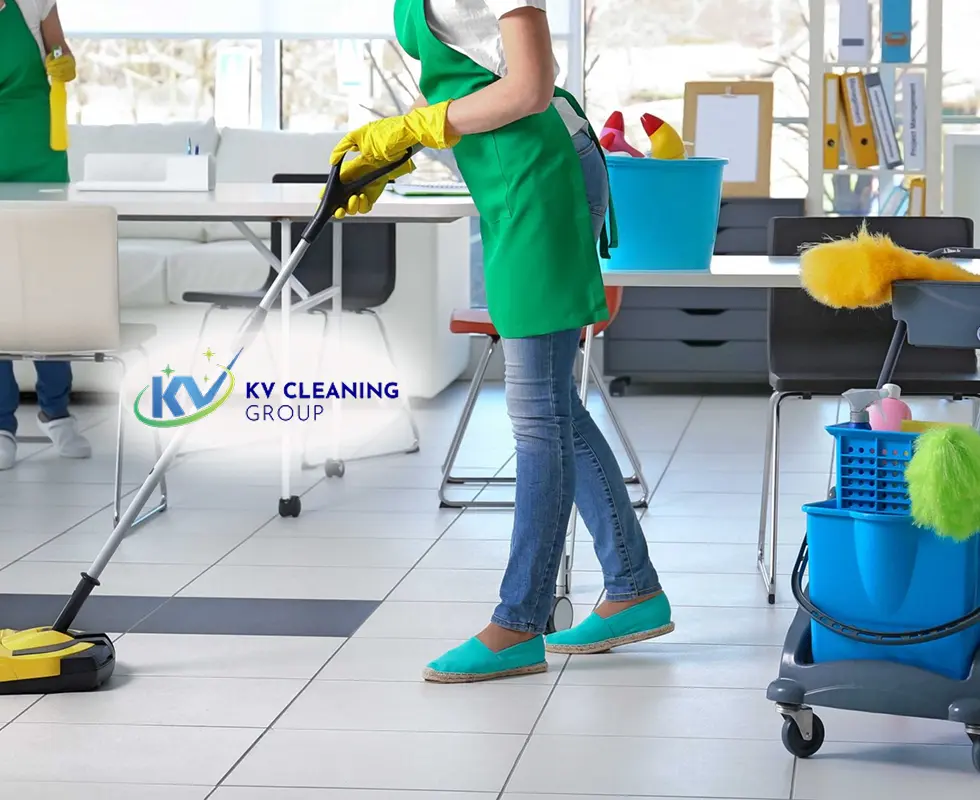
Depending on the facility, professional cleaners may work with commercial vacuum cleaners, floor machines, scrubbers, carpet extraction equipment, pressure-cleaning equipment or other specialised tools.
Equipment needs to be used correctly.
Improper operation can lead to poor results, surface damage, equipment failure or workplace hazards. Trained staff understand operating procedures and can identify when a particular machine or cleaning method is appropriate.
For example, floor-care equipment needs to be matched to the type of flooring, the condition of the surface and the cleaning objective. Carpet extraction requires appropriate settings and drying considerations. Equipment should also be maintained and stored correctly between uses.
3. Protecting Workplace Surfaces and Assets
Commercial cleaning is also about protecting the building.
Floors, carpets, furniture, glass, fixtures, stainless steel, walls and other finishes represent a significant investment. Aggressive chemicals, unsuitable equipment or incorrect cleaning techniques can gradually cause damage.
Experienced cleaning staff learn to recognise differences between surfaces and adjust their methods accordingly.
This can help reduce problems such as:
-
Floor finish deterioration
-
Carpet damage
-
Streaking on glass
-
Residue on hard surfaces
-
Scratches caused by unsuitable equipment
-
Discolouration
-
Excess moisture
-
Damage to sensitive fixtures
A professional cleaning program should therefore consider both cleanliness and surface preservation.
4. Workplace Safety During Cleaning
Cleaning activities take place in environments where people may still be working.
A wet floor, cleaning trolley, electrical equipment or incorrectly stored chemical can create a hazard if appropriate procedures are not followed.
Trained staff should understand basic workplace safety practices, including appropriate signage, safe equipment positioning, chemical handling, manual handling and maintaining clear access routes.
Cleaning should improve the workplace environment rather than introduce additional risks.
This becomes especially important in busy offices, retail environments, commercial buildings and other facilities with continuous movement.
5. Consistent Cleaning Standards
One of the biggest advantages of professional training is consistency.
Businesses do not want a workplace that looks excellent one day and receives incomplete attention the next. Cleaning standards need to remain reasonably consistent across shifts, days and different areas of the facility.
A structured cleaning system can define:
-
What needs to be cleaned
-
How frequently it should be cleaned
-
Which method should be used
-
Which products are appropriate
-
Which areas require additional attention
-
How completed work is checked
This gives cleaners and supervisors a clear reference point.
6. Understanding High-Touch Areas
Not every surface receives the same level of use.
Door handles, lift buttons, shared kitchen surfaces, switches, handrails and other frequently touched areas can receive considerably more contact than less-used surfaces.
Professional cleaning teams can identify these areas and include them in appropriate cleaning routines.
The objective is not simply to clean what is visually noticeable. It is to understand how people use the building and allocate cleaning attention accordingly.
7. Training Helps With Industry-Specific Requirements
Different workplaces have different cleaning considerations.
An office environment may focus heavily on workstations, meeting rooms, kitchens, washrooms and shared areas. A warehouse may have larger floor areas and different traffic patterns. Retail environments may need cleaning around customers and merchandise. Healthcare-related environments can involve more specific hygiene procedures.
A trained cleaning team can adapt its approach to the operating environment instead of applying exactly the same routine everywhere.
This is particularly useful for businesses with specialised facilities or multiple locations.
8. Supervision and Quality Assurance
Training is only one part of a reliable cleaning program.
Supervision and quality assurance are also important.
A professional cleaning operation should have processes for checking whether scheduled work has been completed and whether the expected standard has been achieved.
Quality assurance can include:
-
Cleaning checklists
-
Supervisor inspections
-
Scheduled site reviews
-
Issue reporting
-
Corrective action
-
Client feedback
-
Service records
-
Periodic performance reviews
These processes make it easier to identify recurring problems and improve the cleaning program over time.
9. Why Experience Matters Alongside Training
Training provides the foundation, but practical experience also matters.
Commercial buildings can present unexpected challenges. A particular floor may require a different maintenance approach, a busy entrance may need additional attention, or a building may have restricted access windows.
Experienced cleaners learn how to work efficiently within these practical conditions.
They also become better at recognising areas that may be overlooked during routine cleaning.
For businesses, this means looking beyond the question of whether a cleaner has experience and considering what type of commercial environments that experience covers.
10. Trained Staff Can Help Reduce Avoidable Problems
Poor cleaning practices can sometimes create costs that are not immediately obvious.
Examples include damaged surfaces, excessive chemical consumption, equipment misuse, repeated complaints and missed cleaning tasks.
A structured training program helps reduce these avoidable issues by giving cleaners clear procedures to follow.
The goal is not simply to complete tasks quickly. It is to complete them correctly while using appropriate methods and resources.
11. Training and Cleaning Documentation
Documentation can help businesses understand how their cleaning program is performing.
Depending on the service arrangement, records may include cleaning schedules, inspection results, completed checklists, reported issues and corrective actions.
This information can help facility managers identify patterns.
For example, if the same washroom repeatedly receives complaints, the issue may be related to cleaning frequency, staffing, supplies, usage levels or the cleaning procedure itself.
Good documentation turns individual cleaning tasks into a manageable facility process.
12. What Should Businesses Look For in a Professional Cleaning Team?
When evaluating a commercial cleaning provider, businesses should look beyond the appearance of the quotation.
Useful questions include:
-
How are cleaners trained?
-
Are staff trained in chemical handling?
-
How is equipment training provided?
-
How are cleaning standards monitored?
-
Is there a supervisor or quality control process?
-
How are missed tasks reported?
-
How are service complaints handled?
-
Does the company provide appropriate insurance?
-
Can cleaning schedules be adjusted when operational needs change?
-
Does the provider have experience with similar facilities?
The answers can reveal much more about a provider's operating standards than price alone.
13. Why the Cheapest Cleaning Option May Not Always Be the Best
Price is naturally an important consideration for any business.
However, a very low quotation may not provide the same level of staffing, supervision, cleaning time, equipment, reporting or quality control as a more comprehensive proposal.
Businesses should compare what is actually included.
A useful comparison considers:
Service scope + cleaning frequency + staffing + supervision + equipment + quality assurance + reliability + overall value
This provides a better basis for comparing cleaning proposals than hourly or total price alone.
14. How Professional Cleaning Supports Business Operations
A clean workplace contributes to the overall environment in which employees, customers, tenants and visitors interact.
Well-maintained common areas create a more organised appearance. Clean washrooms and kitchens support everyday workplace comfort. Properly maintained floors and surfaces can also help protect the condition of the facility.
Professional cleaning therefore forms part of broader facility management rather than being an isolated task.
The cleaning program should work alongside the building's operating schedule and maintenance requirements.
15. When Should Businesses Review Their Cleaning Program?
Cleaning requirements can change as a business grows.
A workplace may gain more employees, increase visitor traffic, change its operating hours, expand into another area or introduce new facilities.
When this happens, the original cleaning schedule may no longer be appropriate.
Businesses should periodically review:
-
Cleaning frequency
-
Areas covered
-
High-traffic zones
-
Washroom requirements
-
Kitchen and shared-area usage
-
Floor-care requirements
-
Waste volumes
-
Staff feedback
-
Customer or visitor feedback
-
Quality inspection results
Regular review helps ensure that cleaning resources remain aligned with the actual way the facility is being used.
16. The Difference Between Cleaning and Cleaning Management
A cleaner completing individual tasks is only one part of commercial cleaning.
Effective cleaning management involves planning, scheduling, training, supervision, inspection and communication.
For larger workplaces, this distinction becomes particularly important.
A well-managed cleaning program provides a framework for making sure the right tasks are completed at the right frequency and checked against an agreed standard.
That is where professional processes can provide additional value to businesses.
Choosing Professional Commercial Cleaners in Sydney
Businesses looking for professional cleaning support should consider the complete service model rather than focusing on one factor.
Look for a provider that can demonstrate appropriate staff training, safe working practices, suitable equipment, quality assurance procedures and clear communication.
The right approach will depend on the size and type of facility, occupancy, operating hours, surfaces, cleaning requirements and level of supervision required.
For Sydney businesses, selecting a cleaning team with practical commercial experience can make it easier to establish a cleaning program that fits the workplace rather than forcing the workplace into a generic schedule.
Final Thoughts
Commercial cleaning requires knowledge, planning and consistency.
Professional cleaners need to understand how products, equipment, surfaces, people and workplace procedures interact. Training helps staff perform their responsibilities safely and consistently, while supervision and quality assurance help maintain standards over time.
For businesses, the important question is not simply whether a cleaning company can make a building look clean. It is whether the provider has the people, procedures and quality controls needed to maintain that standard consistently.
Choosing Professional Commercial Cleaners Sydney with appropriate training and commercial experience can therefore be an important part of maintaining a well-managed workplace.
Get Free Quote
Frequently Asked Questions
Professional training helps cleaners follow consistent procedures for workplace safety, chemical handling, equipment operation, surface care and cleaning quality.
The appropriate training depends on the work being performed. Cleaners should receive relevant instruction in workplace safety, chemical handling, equipment use, manual handling and cleaning procedures applicable to the facility.
Yes. Incorrect chemical use, unsafe equipment operation, unsuitable cleaning methods and missed tasks can create avoidable safety, maintenance and quality problems.
Sydney CBD workplaces can have high occupancy, heavy pedestrian traffic, shared facilities, restricted access periods and complex building layouts. These factors can require careful scheduling and cleaning management.
Depending on the facility and cleaning requirements, professional teams may use commercial vacuums, floor machines, carpet extraction equipment, scrubbers and other specialised equipment.
Training gives cleaners a consistent understanding of procedures, products, equipment and surface-specific techniques. This can improve consistency and reduce avoidable cleaning errors.
Offices, retail premises, warehouses, educational facilities, commercial buildings, hospitality environments and other workplaces can benefit from trained cleaning personnel and structured cleaning programs.
Costs depend on factors such as facility size, cleaning frequency, service requirements, staffing, access conditions and specialised cleaning needs. A site-specific assessment is generally the most reliable way to establish the required scope and pricing.