

How to Keep Bank ATM Surroundings Clean Without Disturbing the Equipment
ATMs are among the most frequently used areas within a bank branch. Customers visit them to withdraw cash, check balances, deposit money and complete everyday banking transactions. With regular public use, fingerprints, dust, marks and general surface dirt can quickly become visible around the machine.
However, cleaning around an ATM requires more care than cleaning an ordinary counter or desk. The equipment contains electronic components, screens, card readers, keypads and other sensitive parts that should not be exposed to uncontrolled moisture or unsuitable cleaning products.
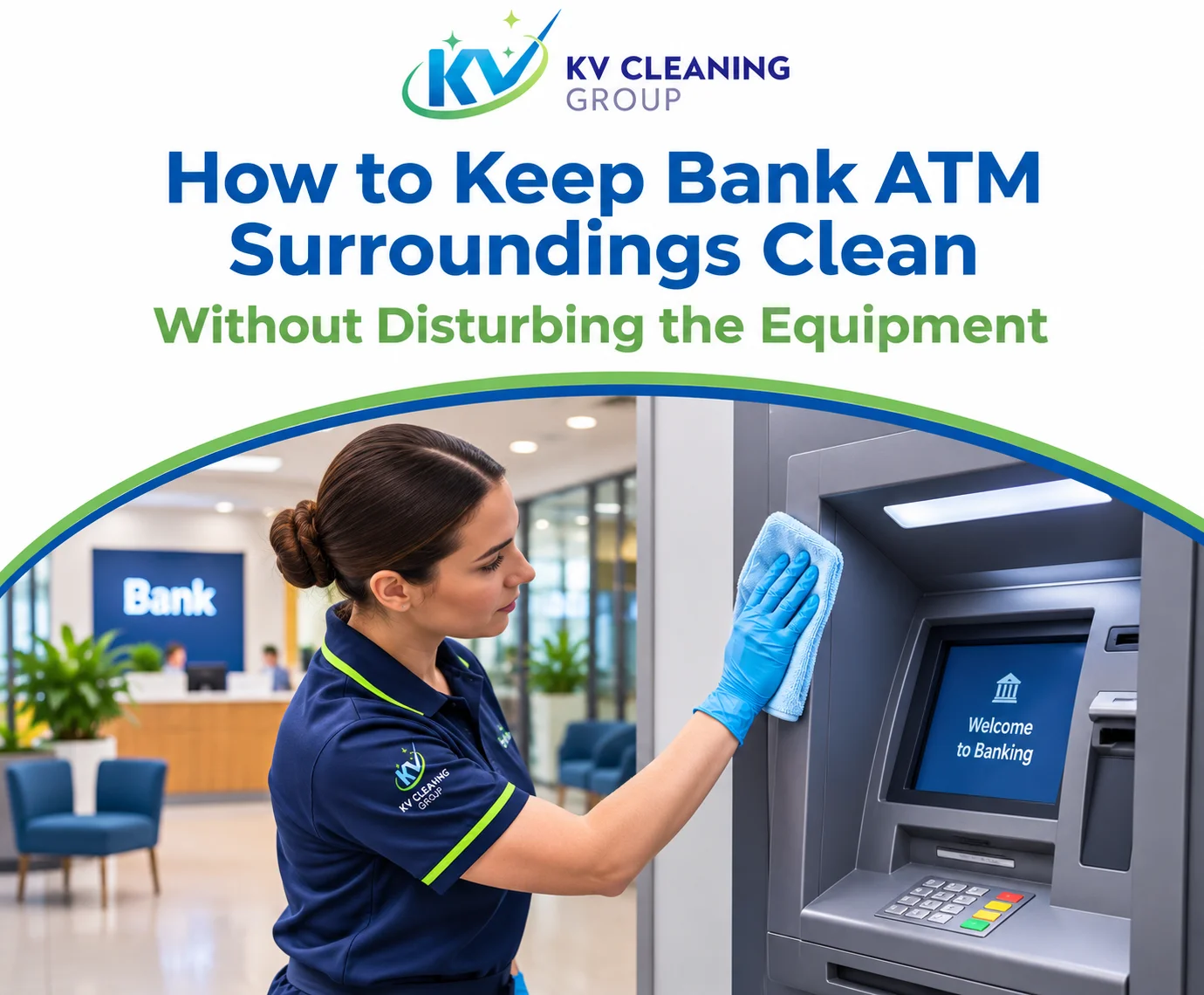
A suitable ATM area cleaning approach focuses on maintaining the surrounding environment while respecting the equipment's operating requirements. Cleaning teams should work only on approved external surfaces and leave internal components, openings and technical parts to authorised personnel.
Why Does ATM Surroundings Cleaning Require Special Attention?
An ATM is both a customer-facing surface and an electronic machine. Its surrounding area needs regular attention, but the cleaning method must not interfere with the equipment.
Several practical considerations make this area different from an ordinary bank lobby.
1. ATMs Have Sensitive Electronic Components
ATMs contain electronic systems and components that may be affected by liquid exposure, unsuitable chemicals or physical interference.
Spraying cleaning solution directly onto a machine can allow liquid to enter openings, seams or other sensitive areas. Even when the intention is only to remove fingerprints, excessive moisture can create unnecessary risks.
A safer approach is to follow the equipment manufacturer's instructions and the bank's approved cleaning procedure. Cleaning staff should never assume that a product suitable for a general counter is also suitable for an ATM.
2. Customers Frequently Touch External Surfaces
ATM keypads, screens, card-entry areas and nearby counters are touched by customers throughout the day.
These contact points may show fingerprints, smudges and visible dirt. Their appearance can influence how customers perceive the cleanliness of the branch.
However, not every part of an ATM should be treated as an ordinary touchpoint. Some surfaces have specific material requirements and may need manufacturer-approved cleaning products or methods.
3. Cleaning Must Not Interrupt Banking Operations
ATMs are often positioned in customer-accessible areas. Cleaning during busy periods can obstruct customers, restrict access or create unnecessary inconvenience.
Cleaning staff should coordinate with branch management to identify suitable cleaning windows. Where possible, work should be organised around customer movement without blocking ATM access or compromising security.
4. Customer Privacy and Security Must Be Respected
Banking areas require particular attention to customer privacy.
Cleaning staff should not handle cash, receipts, cards, customer documents or unattended personal belongings. They should also avoid looking at customer transaction details, recording ATM screens or photographing sensitive areas without explicit permission.
Cleaning work should follow the bank's access, security and confidentiality procedures.
Which Areas Around an ATM Need Regular Cleaning?
The cleaning scope should distinguish between approved external surfaces and equipment components that require specialist attention.
The following table provides a practical overview.
| Area | Common cleaning concern | Important consideration |
|---|---|---|
| External ATM cabinet | Dust and visible marks | Clean only approved exterior surfaces |
| Customer-side surround | Fingerprints and general dirt | Use a surface-compatible method |
| Nearby counter or ledge | Dust, marks and loose debris | Keep liquids away from equipment openings |
| Surrounding floor | Footprints and tracked-in dirt | Use suitable floor products and manage wet-floor risks |
| Wall and partition surfaces | Hand marks and dust | Check the surface finish before cleaning |
| Customer waiting area | General dirt and litter | Maintain access and clear walkways |
| Waste bins | Paper and general rubbish | Follow the branch's waste-handling procedure |
This separation is important because cleaning the area around an ATM does not mean opening the machine or working on its internal components.
How to Clean ATM Surroundings Without Disturbing the Equipment
A structured cleaning process helps teams maintain the surrounding area while avoiding unnecessary contact with sensitive equipment.
Step 1: Check the Bank's Cleaning Instructions
Before starting, confirm which surfaces are included in the approved cleaning scope.
Ask the branch representative or facilities contact to clarify:
-
Which external surfaces can be cleaned?
-
Which parts of the ATM must not be touched?
-
Are there manufacturer-specific cleaning instructions?
-
Which products and cloths are approved?
-
Are there restricted areas or customer privacy requirements?
-
When can cleaning take place without affecting customers?
This prevents cleaning staff from making assumptions about equipment handling.
Step 2: Prepare the Correct Cleaning Equipment
Choose cleaning tools according to the approved task and surface.
Depending on the agreed scope, equipment may include:
-
Clean microfibre cloths.
-
Approved surface-cleaning products.
-
Separate cloths for different cleaning tasks.
-
Suitable gloves where required.
-
Floor-cleaning equipment for the surrounding area.
-
Wet-floor signs where the floor-cleaning task creates a slip risk.
The equipment should be clean and in suitable working condition. Avoid carrying unnecessary liquid containers close to ATM openings or electronic components.
Step 3: Clean Approved External Surfaces Carefully
Use the method specified by the manufacturer or bank procedure.
If damp wiping is permitted, apply the approved solution to the cloth rather than spraying directly onto the machine. Use controlled moisture and avoid excessive pressure.
Do not insert cloths, brushes or other tools into card slots, cash dispensers, receipt openings, ventilation points or other equipment openings.
If a surface cannot be safely cleaned within the approved procedure, leave it untouched and report the issue to the responsible branch contact.
Step 4: Manage Fingerprints and Smudges
Fingerprints are particularly noticeable on glossy surfaces, glass panels and some display surrounds.
Before removing marks, confirm the surface material and approved cleaning method. Some screens and protective coatings can be damaged by abrasive cloths, unsuitable chemicals or excessive pressure.
Never assume that a general glass cleaner or disinfectant is suitable for an ATM display.
Step 5: Clean the Surrounding Floor and Customer Area
The floor around an ATM can collect dust, footwear marks and small pieces of litter.
Clean the accessible floor area using an appropriate method. Avoid excessive moisture, particularly near electrical connections, equipment bases and power points.
Where the floor remains damp, use suitable warning signs and follow the bank's procedures before allowing normal customer access.
Step 6: Inspect the Area Before Leaving
After cleaning, check that the customer area is tidy and accessible.
Confirm that:
-
No cleaning cloths or equipment have been left behind.
-
The floor is suitable for customer use.
-
Waste has been handled according to the branch procedure.
-
No ATM openings or controls have been disturbed.
-
Any equipment-related concerns have been reported.
-
Cleaning records have been completed where required.
Common ATM Cleaning Mistakes to Avoid
Even routine cleaning can create problems when staff use unsuitable products or work beyond their approved responsibilities.
Spraying Cleaning Products Directly onto the ATM
Direct spraying can allow liquid to enter openings or sensitive areas.
Use only the approved application method. Where damp wiping is permitted, controlled application to the cloth may reduce unnecessary liquid exposure.
Using Abrasive Cloths or Rough Materials
Rough materials can scratch or damage certain screen coatings, polished finishes and plastic surfaces.
Choose a compatible cloth and follow the equipment manufacturer's instructions.
Applying Too Much Pressure to Keypads and Buttons
ATM controls should not be pushed, forced or manipulated during cleaning.
A light, controlled method should be used only where the manufacturer or bank has approved cleaning of the relevant external surface.
Using Unapproved Chemicals
Some products may affect coatings, plastics, printed markings and display surfaces.
Never choose a product simply because it works well on ordinary office furniture. Confirm the product's suitability for the particular ATM surface.
Cleaning Inside the ATM
Opening the machine, removing panels, reaching into slots or cleaning internal components is not a routine cleaning task.
These activities should be left to authorised ATM technicians or other personnel approved by the equipment provider.
Blocking Customer Access
Cleaning equipment, buckets and signs should not obstruct ATM entrances, accessible pathways or customer movement.
Coordinate the work with branch staff and maintain a clear route wherever possible.
How Can Banks Maintain Cleaner ATM Areas During Busy Hours?
ATM areas may experience different levels of customer activity throughout the day. A practical maintenance approach should consider both the appearance of the surroundings and the need to keep access available.
Plan Cleaning Around Customer Activity
Branch management can identify quieter periods for more detailed cleaning of approved external surfaces and surrounding areas.
Routine checks can be arranged during normal operating hours where the work does not interfere with customers or restricted access requirements.
Monitor Visible Dirt and Spills
A quick visual check can help staff identify:
-
Fingerprints on approved external surfaces.
-
Dust on nearby ledges.
-
Litter around the ATM.
-
Footprints and marks on the floor.
-
Spills or other visible floor contamination.
-
Waste bins that need attention.
Any issue involving the machine itself should be reported rather than handled through an improvised cleaning method.
Keep Cleaning Supplies Away From the Machine
Cleaning products and equipment should be stored in the location approved by the bank.
Avoid leaving bottles, cloths or buckets on ATM counters, equipment housings or customer transaction areas. This helps maintain an organised environment and reduces the chance of accidental interference.
Record Cleaning and Maintenance Concerns Separately
Cleaning records should identify completed tasks and any visible concerns.
For example, a cleaner may record that dust was observed around an external cabinet or that a display had a mark that could not be removed using the approved method.
Technical faults, damaged components and ATM operating problems should be reported through the bank's maintenance process. They should not be recorded as ordinary cleaning defects alone.
What Should Cleaning Staff Do If They Notice an ATM Problem?
Cleaning staff may notice issues while maintaining the surrounding area. These observations can be useful, but they should not attempt to investigate or repair the machine.
| Observation | Appropriate response |
|---|---|
| Visible dirt on an approved external surface | Follow the authorised cleaning procedure |
| Liquid or spill near the ATM | Keep clear of electrical hazards and notify branch management |
| Loose or damaged external component | Do not touch or attempt to fix it; report it |
| Unusual noise or operating behaviour | Notify the responsible bank contact |
| Damaged keypad or screen | Leave the component untouched and report it |
| Unusual object or suspected tampering | Do not handle it; follow the bank's security reporting procedure |
| Customer property left nearby | Follow the branch's lost-property procedure |
If electrical equipment or a nearby power point appears damaged, cleaning staff should not attempt repairs. SafeWork NSW explains that electrical equipment exposed to conditions such as moisture, heat, mechanical damage or dust may require inspection and testing by a competent person.
ATM Area Cleaning Checklist for Bank Branches
Banks can use the following checklist to review routine cleaning arrangements around ATMs.
-
Confirm the approved ATM cleaning boundaries.
-
Check the manufacturer's and bank's cleaning instructions.
-
Use only approved cleaning products and equipment.
-
Inspect external cabinet surfaces for visible dust and marks.
-
Clean approved surrounding counters and ledges.
-
Check customer-facing surfaces for visible fingerprints.
-
Remove litter and loose debris from accessible areas.
-
Clean surrounding floors using an appropriate method.
-
Keep liquids away from ATM openings and electrical components.
-
Maintain clear customer access during cleaning.
-
Avoid handling cash, cards, receipts and customer belongings.
-
Report damaged equipment or suspected tampering.
-
Record completed work and outstanding concerns.
This checklist is intended for routine cleaning coordination. It does not replace ATM manufacturer instructions, bank security procedures or specialist equipment maintenance.
Why Banks Need Clear Cleaning Responsibilities Around ATMs
ATM areas combine customer activity, electronic equipment and public access. Cleaning responsibilities should therefore be clearly defined before work begins.
Branch management should identify which external surfaces and surrounding areas are included in the cleaning scope. Cleaning teams should understand the products they are allowed to use, the equipment they must avoid and the process for reporting concerns.
This is especially important when multiple teams are involved in maintaining the branch. Cleaning staff may be responsible for approved external surfaces and nearby floors, while ATM technicians handle equipment servicing and internal components.
A clearly defined process helps prevent confusion and ensures that cleaning work stays within the agreed responsibilities.
Keeping Bank ATM Surroundings Clean and Presentable
Maintaining clean ATM surroundings requires more than removing visible fingerprints. Banks need an approach that considers surface compatibility, equipment boundaries, customer access and security procedures.
A careful cleaning process should focus on approved external surfaces, surrounding floors, nearby customer areas and visible dirt. Equipment openings, internal components and technical parts should remain outside routine cleaning activities.
KV Cleaning Group provides cleaning services for commercial workplaces and facilities. Banks considering professional support can review the company's Bank Cleaning Services Sydney page to understand the relevant service offering and discuss site-specific requirements.
For a broader view of the available cleaning options, banks can also explore KV Cleaning Group's commercial cleaning services in Sydney and the company's range of cleaning services.
Where a branch includes staff offices and administrative areas, its office cleaning services may also be relevant to the wider workplace maintenance plan.
For questions about cleaning arrangements, access requirements or a site-specific enquiry, visit the KV Cleaning Group contact page.
The most important consideration is to keep cleaning responsibilities separate from equipment maintenance. With clear instructions and approved methods, banks can maintain presentable ATM surroundings without unnecessary interference with the machines.
Get Free Quote

Frequently Asked Questions
The cleaning frequency depends on customer activity, visible dirt, branch operating hours and the bank's maintenance procedures. Busy ATM locations may need more frequent visual checks than lower-use areas. The bank should establish an appropriate schedule.
Only when the equipment manufacturer and bank procedures permit it. Screens may have special coatings and require specific cleaning products or methods. Staff should not use ordinary glass cleaners or abrasive materials without approval.
No. Direct spraying can allow liquid to enter equipment openings. Any permitted cleaning method should follow the manufacturer's instructions and the bank's approved procedure. Where damp wiping is authorised, the application method should control moisture carefully.
No. Opening an ATM or cleaning its internal components is not a routine cleaning responsibility. Internal maintenance should be performed by authorised technicians.
They should avoid touching or attempting to repair the equipment. The issue should be reported promptly to the branch manager or the designated bank contact, following the bank's security and maintenance procedures.