

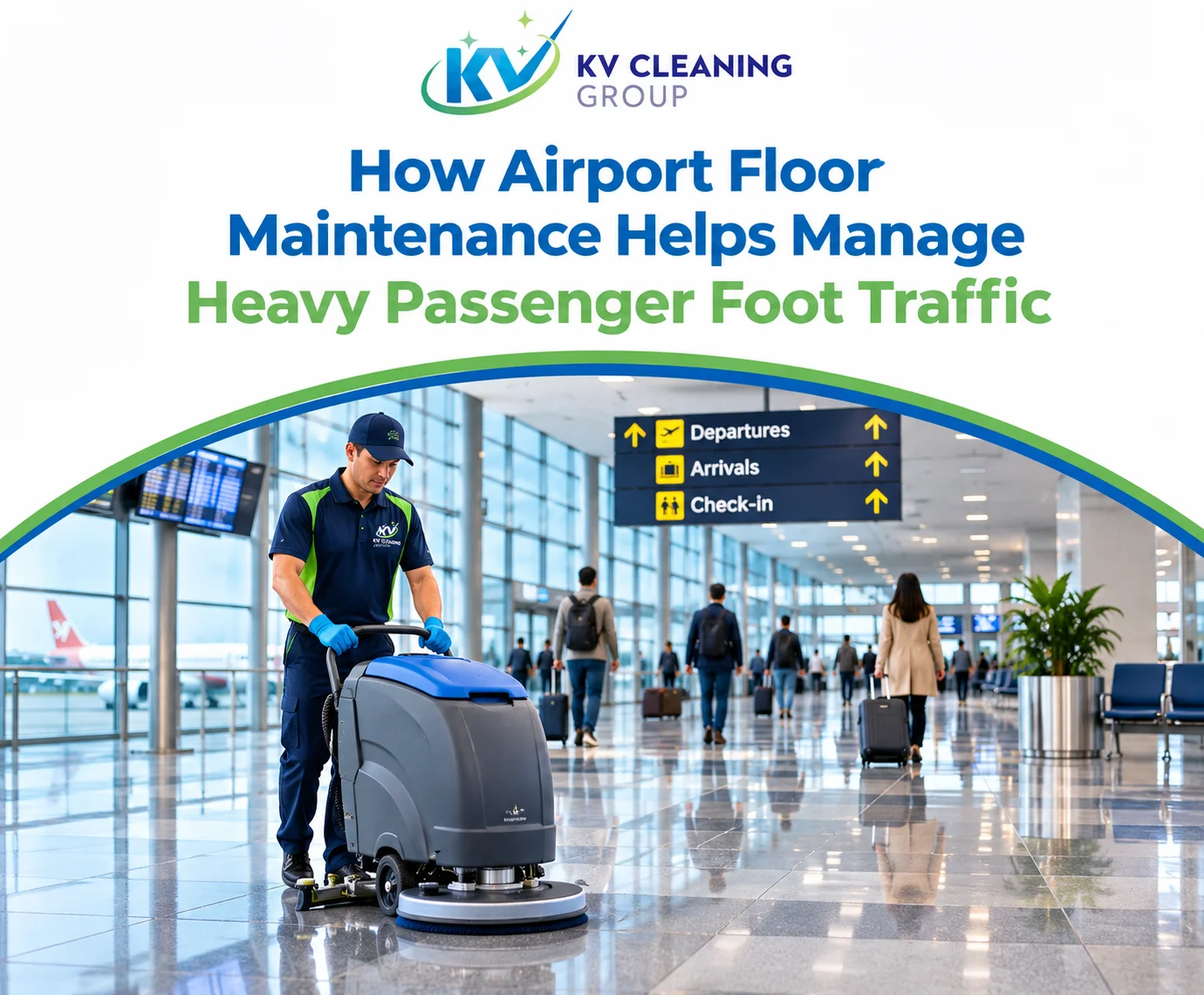
How Airport Floor Maintenance Helps Manage Heavy Passenger Foot Traffic
Airports operate throughout the day, with passengers, airport employees, contractors and visitors moving through terminals at different times. Check-in queues, security screening areas, departure gates, baggage collection zones and arrivals corridors all experience regular foot traffic. As people move through these spaces, they bring in dust, grit, moisture and other debris that can affect floor appearance and condition.
Airport floor maintenance helps manage these demands by keeping surfaces clean, monitoring areas that collect dirt quickly and scheduling maintenance around passenger movement. It is not simply about making floors look polished. The approach also needs to consider the flooring material, the type of contamination, pedestrian access and the time required for a surface to dry before it is used again.
Why Airport Floors Need Consistent Maintenance
Unlike many workplaces, airport terminals have several public areas operating at the same time. Passenger movement can continue even when individual zones become quieter. A cleaning routine that works for an unused office corridor may not be suitable for a busy terminal entrance or baggage collection area.
Several factors influence how quickly airport floors become dirty:
-
Continuous passenger movement: Repeated foot traffic carries dirt and fine particles across entrances, walkways and terminal floors.
-
Luggage and trolley movement: Suitcase wheels and baggage trolleys can transfer dirt and create scuff marks.
-
Changing weather: Rainwater, mud and wet debris can be tracked inside through external entrances.
-
Food and drink spills: Cafés, food courts and waiting areas can experience spills throughout operating hours.
-
Different floor materials: Stone, tiles, vinyl, carpet and other surfaces require different cleaning and maintenance methods.
These conditions mean that floor maintenance should be planned according to how each area is used, rather than applying one identical cleaning routine throughout the terminal.
1. Identify the Areas That Experience the Most Passenger Traffic
The first step is to understand where passenger movement is concentrated. Not every part of an airport terminal experiences the same level or type of use.
| Airport area | Common floor maintenance concern | Maintenance consideration |
|---|---|---|
| Main entrances | Rainwater, dust and outdoor debris | Monitor tracked-in moisture and dirt |
| Check-in halls | Queues, luggage wheels and repeated walking | Maintain clear routes and inspect busy walking lanes |
| Security screening areas | Concentrated passenger movement and waiting | Coordinate cleaning around queue activity |
| Departure gates | Passengers waiting and moving between seating and boarding | Check walkways, seating surrounds and visible marks |
| Arrivals corridors | Continuous movement with luggage | Monitor dirt accumulation and trolley marks |
| Baggage collection areas | Trolley movement and concentrated foot traffic | Inspect floors around carousels and passenger routes |
| Food courts and cafés | Food crumbs, drink spills and chair movement | Respond to spills and clean around dining activity |
| Toilets and washroom entrances | Moisture and frequent use | Monitor wet areas and maintain suitable cleaning routines |
This area-based approach helps facility teams identify where cleaning attention may need to be increased. For example, a terminal entrance exposed to rain may need more frequent inspections during wet weather, while a quieter corridor may require a different routine.
2. Manage Dirt and Moisture at Airport Entrances
Entrances are important points in an airport floor maintenance plan because they connect outdoor conditions with indoor passenger areas. People entering from car parks, taxi zones, buses and drop-off areas can carry water, soil and fine debris into the terminal.
If this material is allowed to spread, it can affect a much larger floor area and increase the amount of work needed later.
Useful entrance maintenance considerations include:
-
Inspecting entrance floors regularly, particularly during wet weather.
-
Checking entrance matting for accumulated dirt and moisture.
-
Removing visible debris before it is spread further into the terminal.
-
Responding promptly to water or other spills.
-
Checking whether mats remain correctly positioned and do not create trip hazards.
-
Reviewing the entrance cleaning routine when weather or passenger activity changes.
Matting can help capture some dirt and moisture, but it should not replace floor cleaning. Mats also need to be inspected and maintained so that they do not become another source of debris or an obstruction.
3. Choose Cleaning Methods According to the Flooring Material
Airport terminals can contain several flooring types, and each one has different care requirements. Using the same product, equipment or cleaning process across every surface may produce poor results or cause avoidable damage.
Hard floors
Stone, ceramic tiles, vinyl and other hard surfaces can collect dust, shoe marks, spills and tracked-in grit. The suitable maintenance process depends on the surface finish, manufacturer instructions and type of contamination.
Routine care may involve removing loose debris, using a suitable cleaning solution and addressing marks before they become difficult to remove. More intensive cleaning may be needed when dirt accumulates beyond what routine maintenance can manage.
Carpeted areas
Carpet can be found in selected airport lounges, office areas and other designated spaces. It can collect dry soil, dust and spills within its fibres.
Regular vacuuming helps remove loose particles, while periodic professional cleaning may be appropriate when embedded soil or visible marks build up. The cleaning method should suit the carpet fibre, condition, access requirements and available drying time.
For more information about maintaining commercial carpet, see KV Cleaning Group's commercial carpet cleaning services.
Textured and specialist flooring
Some airport floors have textured finishes or specialist surface treatments. Their cleaning requirements should be checked before selecting equipment or chemicals. Aggressive scrubbing or unsuitable products may affect the surface finish.
Cleaning teams should follow the flooring manufacturer's care instructions and any site-specific requirements before carrying out maintenance.
4. Keep Walkways Clean Without Disrupting Passenger Movement
Cleaning a busy airport floor requires more than choosing an appropriate cleaning product. The work also needs to be organised so passengers can continue moving through the terminal.
Cleaning across an entire walkway at once may restrict access or force passengers into crowded alternative routes. A more practical approach may be to divide suitable areas into sections and clean them in stages, where the terminal layout and site procedures permit.
Consider the following:
-
Identify the busiest pedestrian routes and any alternative access paths.
-
Coordinate cleaning with airport operations or the relevant site contact.
-
Select a suitable time or quieter operating period where possible.
-
Isolate the section being cleaned using appropriate barriers.
-
Keep an accessible alternative route available where required.
-
Confirm that the floor is sufficiently dry and safe before reopening the area.
The SafeWork NSW guide to preventing slips, trips and falls explains the importance of suitable floor-cleaning procedures, managing access to floors that have not dried and coordinating cleaning responsibilities. These principles are relevant when planning maintenance in busy public walking areas.
5. Respond Quickly to Spills and Visible Contamination
A scheduled cleaning routine cannot predict every spill or unexpected source of dirt. Food and drink spills, tracked-in rainwater and other contamination can occur between planned cleaning activities.
A practical response process should make clear:
-
Who is responsible for identifying and reporting a spill.
-
How the affected area is isolated from pedestrian access.
-
Which cleaning method is suitable for the substance and floor material.
-
How the area is checked after cleaning.
-
When the area can safely return to normal use.
-
How recurring problems are reported to the relevant site contact.
Cleaning should not create a new hazard. Wet floors need to be managed so that passengers do not walk through an area before it is ready for use. Signs alone may not be enough to prevent access where a more effective barrier or alternative route is required.
6. Use a Maintenance Schedule Based on Passenger Activity
A useful airport floor maintenance schedule should reflect how each terminal zone is used. A fixed timetable may provide a starting point, but actual cleaning needs can change with passenger volumes, weather, events, flight schedules and operational conditions.
A maintenance plan can separate tasks into different timeframes:
| Maintenance frequency | Example tasks |
|---|---|
| During operating periods | Inspect busy entrances, respond to spills and check visible contamination |
| Daily | Complete agreed routine floor cleaning and inspect high-use areas |
| Periodically | Review floor condition and arrange deeper cleaning where required |
| When needed | Address unexpected spills, marks, weather-related dirt or other reported issues |
These are planning categories rather than a universal airport cleaning timetable. The actual frequency should be determined by the airport's operating requirements, floor types, traffic patterns and agreed site procedures.
Facility teams can also review cleaning records and inspection findings to identify areas where dirt repeatedly builds up. If the same entrance or walkway needs frequent attention, the maintenance plan may need to be adjusted.
7. Monitor Floor Condition and Identify Wear Early
Heavy passenger movement can affect floors over time. Repeated walking, luggage wheels, trolley movement and cleaning activity may contribute to visible wear, scratches, surface changes or damaged sections.
Routine inspections can help identify issues before they become more difficult to manage.
Look for:
-
Loose, cracked or damaged tiles.
-
Worn or lifting floor coverings.
-
Changes in the surface finish.
-
Persistent marks that do not respond to routine cleaning.
-
Damaged entrance matting.
-
Uneven transitions between different floor surfaces.
-
Areas where water repeatedly collects.
-
Obstructions or damaged fittings along pedestrian routes.
Cleaning teams should report defects rather than treating every floor problem as a cleaning issue. Repairs, specialist surface treatment and slip-resistance assessments may require a qualified flooring or maintenance professional.
8. Coordinate Floor Maintenance Across Different Airport Teams
Airport floor maintenance involves more than the cleaning team. Terminal operations, facilities management, security, retail tenants and other site personnel may all have responsibilities that affect access and cleaning arrangements.
Clear communication helps avoid conflicting activities and makes it easier to respond to changing conditions.
For example, a cleaning team may need to know when a section of the terminal is being refurbished, when a temporary queue is being installed or when passenger access is changing. Similarly, airport operations staff should know when cleaning work temporarily affects a walkway.
A coordinated process should establish:
-
The person responsible for approving cleaning access.
-
The process for reporting spills and floor defects.
-
Areas that require restricted access during cleaning.
-
Any approved cleaning products or equipment.
-
Procedures for unusual incidents or operational changes.
-
How completed work and unresolved issues are recorded.
For larger facilities with several shared areas, a planned approach to commercial facility cleaning can help organise cleaning tasks around the way different parts of the building are used.
9. Review the Maintenance Plan as Conditions Change
An airport floor maintenance plan should not remain unchanged if passenger movement, floor condition or terminal use changes.
A review may be useful when:
-
A new retail or food outlet opens.
-
Passenger queues move to a different area.
-
A terminal section is renovated.
-
Entrance conditions change due to seasonal weather.
-
A floor surface begins showing repeated wear.
-
Spill reports become more frequent in a particular zone.
-
Cleaning activities regularly conflict with passenger movement.
Reviewing these changes helps the facility team decide whether the cleaning frequency, equipment, access arrangements or maintenance responsibilities need to be updated.
How Professional Airport Cleaning Supports Floor Maintenance
Professional cleaning support can help airport facility teams organise routine floor care, monitor high-use areas and respond to changing site requirements. The scope should be based on the flooring materials, passenger movement, operating hours and access conditions.
KV Cleaning Group provides cleaning services for different commercial and public-facing environments. Airport-specific requirements should be discussed with the team so that the proposed work can be assessed against the site's access arrangements and operational needs.
You can learn more about airport cleaning services in Sydney and the wider range of cleaning services offered by KV Cleaning Group.
Conclusion
Airport floor maintenance helps manage the daily effects of heavy passenger movement by addressing tracked-in dirt, moisture, spills, surface wear and changing cleaning requirements. The most useful approach is to assess each terminal zone separately, select methods that suit the floor material, manage access while cleaning and inspect surfaces regularly.
A maintenance plan that responds to passenger activity and changing conditions can help facility teams keep terminal floors clean, presentable and suitable for everyday use.
For airport cleaning enquiries, discuss the site location, floor types, high-traffic areas and preferred cleaning arrangements with KV Cleaning Group.
Get Free Quote

Frequently Asked Questions
Airport floors experience repeated passenger movement, luggage traffic, spills and changing weather conditions. Regular maintenance helps remove accumulated dirt, monitor floor condition and address contamination before it spreads across larger areas.
Entrances, check-in halls, security queues, departure gates, baggage collection areas, food courts and washroom entrances may need closer monitoring because passenger movement, moisture or spills can be concentrated in these locations.
Cleaning should be coordinated with the relevant site team. Where suitable, work can be completed in sections, with barriers and alternative routes used to manage access until the cleaned surface is ready for passengers.
No. Stone, tiles, vinyl, carpet and specialist flooring can have different care requirements. Cleaning products and equipment should be selected according to the material, its condition and the manufacturer's instructions.
There is no single schedule suitable for every airport. Frequency depends on passenger activity, floor material, weather exposure, contamination levels and operational requirements. Regular inspections can help determine when routine or deeper maintenance is needed.