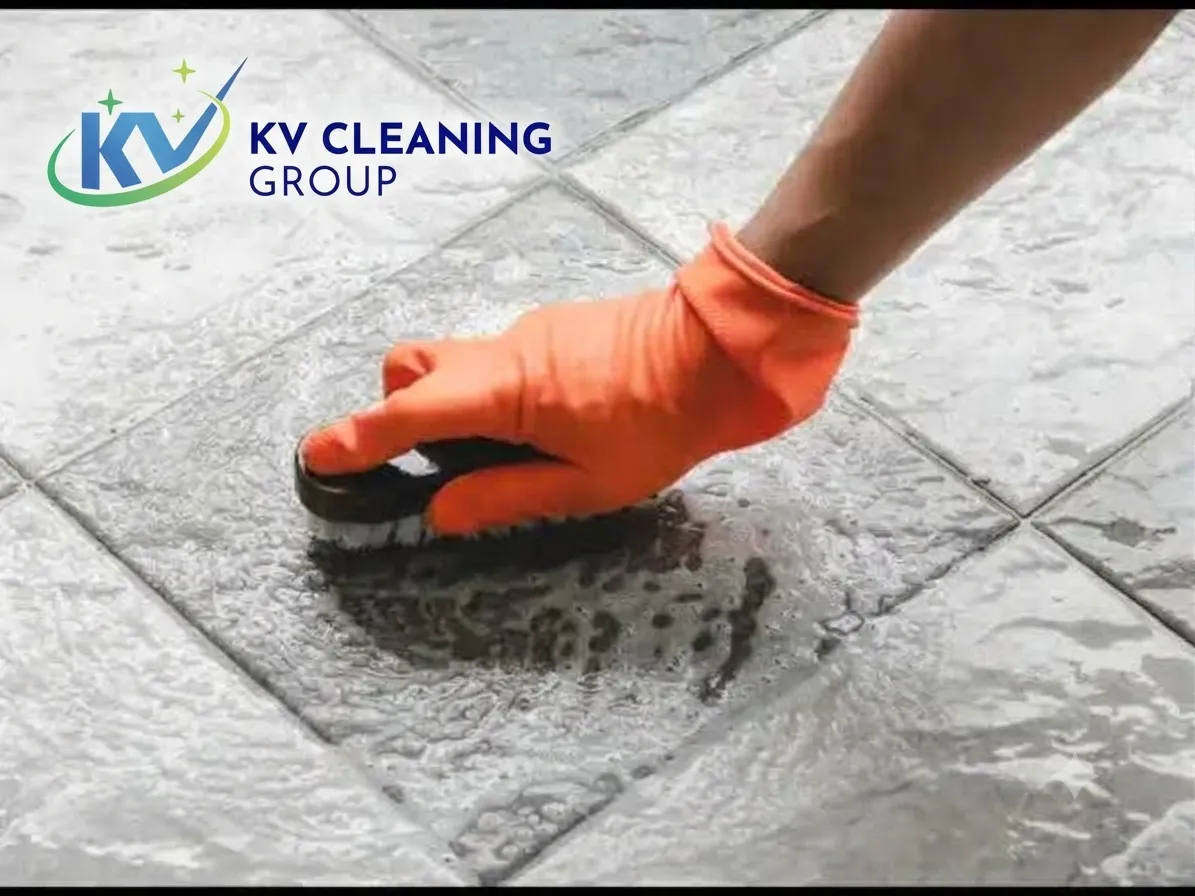
Muddy footprints are more than an appearance problem.
After heavy rain, wet weather or outdoor work, mud can quickly be tracked through commercial entrances, reception areas, corridors, warehouses, offices and other high-traffic spaces. What begins as a few footprints near the entrance can become a much larger cleaning problem once dozens of people walk over the same area.
The obvious response is to mop the floor. However, simply spreading water over mud is not always the best approach.
Mud contains soil, fine particles, organic material and moisture. If it is pushed across a hard surface with a wet mop, the result can be a larger dirty film rather than a genuinely clean floor. On some surfaces, excessive moisture or cleaning-product residue can also affect traction.
This matters in workplaces because slips and trips are not simply cosmetic concerns. SafeWork NSW identifies slips, trips and falls as one of the major causes of serious workplace injuries in NSW and specifically highlights contaminants, wet floors and inappropriate cleaning methods as potential risks. SafeWork NSW has also reported more than 13,000 slip, trip and fall injuries in NSW over a one-year period.
So, what should a business actually do when muddy footprints appear?
The answer depends on how much mud is present, whether it is still wet, what type of floor is underneath and how heavily the area is being used.
Why Muddy Footprints Should Be Cleaned Differently From Ordinary Dust
Dry dust and mud may look similar from a distance, but they behave differently during cleaning.
Dry dust can often be removed through vacuuming, sweeping or another dry-removal method. Mud contains moisture and soil particles that can stick to the surface.
When a wet mop is immediately pushed across a muddy floor, several things can happen:
- Mud can spread beyond the original footprint.
- Fine soil can form a dirty film across the surface.
- More water may be used than necessary.
- The cleaning solution can become contaminated quickly.
- Repeated mopping may be required.
- Heavy traffic can redistribute the remaining soil.
- Some smooth surfaces may become slippery while wet.
This is why the first step should not always be "add more water."
A better approach is to remove as much loose contamination as practical before using a controlled wet-cleaning method.
Step 1: Stop the Mud From Spreading
The fastest way to make a small muddy area become a large one is to allow unrestricted foot traffic through it.
If muddy footprints are appearing near a commercial entrance, the first priority is to control the affected area.
Depending on the workplace, this may involve:
- directing people through an alternative entrance;
- temporarily restricting access to the affected section;
- placing suitable warning signage where required;
- using entrance mats;
- removing visible mud from the main traffic route;
- increasing cleaning frequency during the wet-weather period.
This is particularly important in reception areas, shopping environments, warehouses, medical facilities and other workplaces where many people may enter within a short period.
The objective is simple: contain the problem before cleaning it.
Step 2: Remove Loose Mud Before Mopping
If mud is still sitting on the surface, do not immediately flood the area with water.
Where conditions allow, remove loose or semi-dry soil first using an appropriate dry-removal method.
The exact approach depends on the floor and the amount of contamination.
For example:
Light mud
Small amounts of loose soil may be removed before the floor is damp cleaned.
Wet mud
Very wet mud may need to be collected carefully rather than pushed around with a mop.
Heavy tracked-in soil
A larger entrance area may need a more structured cleaning sequence, especially if employees, customers or vehicles continue to introduce additional contamination.
Removing loose material first reduces the amount of soil that has to be dissolved and moved around during wet cleaning.
Step 3: Identify the Floor Type
There is no single cleaning method that is appropriate for every commercial floor.
Before selecting a cleaning product or cleaning technique, consider the surface.
Common commercial floor types include:
- Vinyl
- Ceramic tiles
- Porcelain tiles
- Concrete
- Sealed concrete
- Natural stone
- Terrazzo
- Rubber flooring
- Commercial carpet
- Safety flooring
- Other specialist floor finishes
A cleaning method that works well on one surface may be unnecessary or unsuitable on another.
For example, a smooth commercial vinyl floor may need a controlled damp-cleaning approach, while a textured exterior concrete walkway may require a completely different method.
The condition of the surface also matters.
A worn, damaged, cracked or poorly maintained floor may behave differently during cleaning than a newer, well-maintained surface.
SafeWork NSW specifically recommends that workplaces consider whether flooring provides adequate grip under the conditions in which it is used and whether the cleaning program is appropriate for the flooring and expected contamination.
Step 4: Use the Right Amount of Water
More water does not automatically mean a cleaner floor.
This is one of the most common mistakes when dealing with muddy footprints.
Excess water can spread contamination, increase drying time and create temporary slip hazards on some surfaces.
The amount of moisture should be appropriate for:
- the floor material;
- the amount of mud;
- the cleaning method;
- the condition of the floor;
- drainage;
- ventilation;
- the level of pedestrian traffic.
For indoor commercial areas, controlled damp cleaning is often more practical than unnecessarily saturating the floor.
The goal is to remove the contamination, not simply move it from one part of the floor to another.
Step 5: Choose a Cleaning Product That Matches the Surface
Mud is primarily a soil problem, but that does not mean every general-purpose cleaning chemical should be used.
The cleaning product should be compatible with the floor and used according to its manufacturer's instructions.
Businesses should avoid randomly mixing different cleaning chemicals in an attempt to produce a stronger solution.
Product selection should consider:
- floor material;
- manufacturer's recommendations;
- type of contamination;
- dilution requirements;
- workplace safety;
- required drying conditions.
For workplaces using cleaning chemicals, SafeWork NSW guidance highlights the importance of suitable cleaning methods, appropriate products and controls for slip and trip risks.
Step 6: Clean From the Cleaner Area Towards the Dirtier Area
The direction of cleaning matters.
If a cleaner starts in the heavily contaminated section and repeatedly moves the same mop or cleaning equipment across cleaner areas, soil can be redistributed.
A more organised approach is to work through the area systematically.
For example:
- Identify the affected zone.
- Remove loose soil.
- Start with the cleaner section where practical.
- Progress towards the more contaminated area.
- Replace or clean the cleaning solution when necessary.
- Avoid spreading visibly dirty water across already-cleaned areas.
- Inspect the finished surface before reopening the area.
This sounds simple, but it can make a noticeable difference in busy commercial environments.
Why Entrance Areas Usually Need More Attention
The entrance is often where muddy footprints begin.
People walk from outdoor surfaces onto indoor flooring, bringing moisture and soil with them. In a commercial building, this process can happen hundreds of times during a busy day.
The entrance therefore deserves more attention than a low-traffic room.
Look at:
- Doorways
- Reception areas
- Entry corridors
- Security desks
- Lift entrances
- Walkways connecting outdoor and indoor areas
- Loading entrances
- Warehouse access doors
A cleaning schedule based purely on the total floor area can miss this difference.
A 1,000 m² property does not necessarily have the same cleaning requirement across all 1,000 m².
A small entrance may receive far more contamination than a large office area that sees little foot traffic.
Entrance Mats Can Help Reduce Tracked-In Mud
Cleaning is only one part of the solution.
A properly selected and maintained entrance mat can help capture moisture and soil before it reaches the main floor.
However, putting down a mat and forgetting about it does not solve the problem.
Mats themselves collect:
- Soil
- Water
- Sand
- Mud
- Organic material
- General outdoor debris
If they become saturated or heavily contaminated, their ability to capture additional material can be reduced.
For this reason, entrance mats should form part of the property's routine cleaning and inspection process.
Consider:
- whether the mat is large enough for the entrance;
- whether it remains flat and secure;
- whether it is becoming saturated;
- whether it is regularly cleaned;
- whether the surrounding floor is still receiving excessive tracked-in soil.
SafeWork NSW also identifies mats and good housekeeping as potential controls when managing slip, trip and fall risks.
What To Do With Muddy Footprints on Different Commercial Floors
Different surfaces need different considerations.
Vinyl Flooring
Vinyl is commonly found in offices, healthcare environments, retail properties and other commercial buildings.
For muddy footprints, loose soil should be removed before controlled damp cleaning.
Avoid leaving excessive water on the surface, particularly in areas where people continue walking.
The cleaning product should be compatible with the flooring manufacturer's recommendations.
Ceramic and Porcelain Tiles
Tiles can be relatively straightforward to clean, but grout lines can retain fine soil.
If muddy footprints are concentrated around entrances, simply wiping the surface may leave dirt in textured areas or grout joints.
The cleaning method should therefore consider both the tile surface and the condition of the grout.
Smooth tiles can also become slippery when wet, so drying and access control should not be ignored.
Concrete Floors
Concrete can be found in warehouses, industrial properties, service areas, loading zones and other commercial environments.
Mud may become embedded in textured or porous surfaces, particularly where the concrete is exposed to repeated outdoor contamination.
For larger exterior or heavy-duty areas, a more suitable commercial cleaning method may be required rather than ordinary indoor mopping.
KV Cleaning's commercial pressure washing service covers suitable exterior commercial surfaces such as concrete areas, walkways, driveways, car parks and hardstands, with the method selected according to the surface condition and contamination.
Natural Stone
Natural stone requires additional care because different stones have different characteristics.
A cleaning chemical that is suitable for one material may not be appropriate for another.
If the surface is expensive, sensitive or unfamiliar, it is better to confirm the manufacturer's cleaning recommendations before using a strong chemical.
Commercial Carpet
Muddy footprints on carpet are a different problem.
The soil can become embedded within the carpet fibres, particularly when people continue walking over the area while it is wet.
Do not simply keep adding water to a heavily soiled carpet.
Instead, the carpet should be assessed based on its fibre, construction, condition and type of contamination.
KV Cleaning's commercial carpet cleaning service provides a separate approach for commercial carpet where deeper soil, staining and odour issues require more than routine floor cleaning.
This article is about managing muddy footprints and tracked-in soil; it is not intended to replace the more detailed carpet-cleaning guidance available on the dedicated service and carpet-related resources.
Why Wet Mud Can Become a Slip Problem
Muddy floors can create a different risk from dry dirt.
The combination of water, soil and footwear can reduce traction depending on the surface.
This is especially important on smooth floors and areas where people are walking quickly, carrying items or moving between different floor materials.
SafeWork NSW states that contaminants such as water, grease, oil, dust and other substances can contribute to slips and trips. It also identifies cleaning products and cleaning methods themselves as potential contributors when they make surfaces slippery.
That means cleaning should not create a second problem.
A floor can look clean while still requiring attention if:
- it remains excessively wet;
- cleaning residue has been left behind;
- mud has been spread into a thin film;
- pedestrians are still entering the area;
- warning controls have not been provided where required;
- the floor surface itself has a maintenance problem.
Cleaning and workplace safety should therefore be considered together.
How Businesses Should Handle Mud During Heavy Rain
Sydney businesses do not need to wait until the floor is covered in footprints before changing their cleaning routine.
During periods of heavy rain, businesses can increase attention around entrances and other exposed access points.
A practical wet-weather routine may include:
Before busy periods
Check entrance mats, drainage and high-traffic access points.
During heavy traffic
Inspect the entrance regularly rather than waiting for the floor to become visibly dirty.
When mud appears
Contain the affected area and remove contamination before it spreads.
After the peak period
Complete a more thorough clean once foot traffic reduces.
After the weather improves
Inspect surrounding entrances, walkways and external areas for accumulated soil.
This approach is usually more effective than treating the entire property as if every section receives the same amount of contamination.
Warehouse Entrances Need a Different Approach
Warehouses can experience much heavier soil loading than a typical office.
Employees may move between:
- loading docks;
- outdoor yards;
- storage areas;
- production areas;
- staff rooms;
- offices;
- vehicle access routes.
Forklifts, delivery vehicles and pedestrian traffic can introduce additional dirt and moisture.
In these environments, the most useful question is often not "How often should the entire floor be mopped?"
Instead, ask:
Where is the contamination entering the building, and how far is it travelling?
Mapping those routes can help determine where additional cleaning, mats, barriers or more frequent inspections may be useful.
For businesses with large operational areas, KV Cleaning provides warehouse cleaning services designed around large floor areas, access paths, storage zones and operational spaces.
Offices Have a Different Mud Problem
An office may have less heavy soil than a warehouse, but entrances can still become visibly dirty very quickly during wet weather.
The most noticeable areas are often:
- Reception
- Main entrance
- Lift lobbies
- Corridors
- Meeting-room approaches
- Kitchen entrances
- Shared walkways
For office managers, the solution is usually not to increase cleaning everywhere.
Instead, identify the high-traffic areas and adjust the frequency there.
KV Cleaning's office cleaning services are planned around areas such as workstations, reception, meeting rooms, kitchens, amenities and shared office spaces.
How Often Should Muddy Commercial Floors Be Cleaned?
There is no universal number that works for every commercial property.
Cleaning frequency depends on:
- foot traffic;
- number of entrances;
- weather exposure;
- floor type;
- outdoor conditions;
- business type;
- operating hours;
- number of employees and visitors;
- presence of loading areas;
- existing entrance matting;
- how quickly contamination returns.
A low-traffic office may need occasional additional attention during wet weather.
A busy retail entrance may need inspection several times throughout a rainy day.
A warehouse with outdoor loading areas may need a more structured cleaning routine.
The important point is that frequency should follow contamination, not simply the calendar.
A Simple Muddy Footprint Inspection Checklist
Property managers and cleaning teams can use this quick checklist during wet weather.
Entrance
- Are muddy footprints visible?
- Is the entrance mat saturated?
- Is water being carried beyond the mat?
- Is there a visible accumulation of soil?
Main floor
- Has mud spread beyond the entrance?
- Is there a visible dirty film?
- Is the surface still wet?
- Are people continuing to walk through the affected area?
Safety
- Is the floor slippery?
- Is access to the area controlled where necessary?
- Is appropriate signage being used?
- Are there trip hazards around mats or cleaning equipment?
Cleaning
- Has loose soil been removed?
- Is the cleaning method suitable for the floor?
- Is excessive water being used?
- Does the floor need another inspection after drying?
Prevention
- Is the entrance mat appropriate?
- Does it need more frequent cleaning?
- Is outdoor soil being tracked in from a particular route?
- Does the cleaning schedule need temporary adjustment?
When DIY Cleaning Is Enough
Not every muddy footprint requires a commercial cleaning contractor.
A small amount of tracked-in mud can often be managed by an in-house cleaning team when:
- the contamination is limited;
- the floor type is known;
- suitable cleaning products are available;
- staff know the correct cleaning procedure;
- the area can be safely isolated while wet;
- the cleaning equipment is appropriate.
The important part is using the correct method rather than simply using more chemical or more water.
When Professional Floor Cleaning Makes More Sense
Professional help may be useful when:
- mud has accumulated over a large area;
- soil has become embedded;
- the floor has not been maintained for an extended period;
- heavy foot traffic continues throughout the day;
- the surface is difficult to clean;
- the property has multiple floor types;
- recurring soil is affecting the appearance of the building;
- cleaning is disrupting normal business operations;
- the problem involves both indoor and outdoor areas.
For larger commercial properties, professional cleaning can also help establish a practical maintenance schedule instead of repeatedly reacting to visible dirt.
KV Cleaning currently reports 22+ years of industry experience, 525+ commercial cleaning projects, 126+ businesses served annually, more than 1.2 million square metres cleaned and 43+ trained cleaning professionals. These are company-reported figures and represent the wider commercial cleaning operation rather than this specific muddy-footprint service.
Muddy Footprints Are Often a Maintenance Signal
A useful way to think about muddy footprints is not simply as a cleaning problem.
They can show you where a building is receiving the most contamination.
If the same area becomes dirty every time it rains, there may be an opportunity to improve the overall maintenance system.
For example:
- The entrance mat may be too small.
- An outdoor walkway may be carrying excessive soil.
- Drainage may need attention.
- A particular doorway may be receiving unusually high traffic.
- The cleaning frequency may be too low during wet weather.
- A loading entrance may need a different maintenance schedule.
- The floor may require periodic deep cleaning.
This turns a reactive cleaning task into a useful property-maintenance observation.
How to Prevent Muddy Footprints From Returning
The best muddy-footprint strategy is prevention.
1. Improve entrance matting
Use suitable mats at the main entrance and keep them maintained.
2. Monitor high-traffic routes
Identify where outdoor soil is entering the building.
3. Increase inspection during wet weather
Do not wait until the floor looks heavily contaminated.
4. Keep external areas maintained
Outdoor paths and access areas can influence how much soil is brought inside.
5. Adjust cleaning frequency
A temporary increase during periods of heavy rain may be more effective than increasing cleaning permanently.
6. Train cleaning staff
Staff should understand the difference between dry soil removal, damp cleaning and deeper cleaning.
7. Protect pedestrian safety
Wet cleaning should be planned so that people are not unnecessarily exposed to wet or contaminated floors.
8. Review recurring problem areas
If the same entrance repeatedly becomes muddy, investigate why instead of simply cleaning the same footprints every day.
Mud on Exterior Commercial Areas
Not all muddy footprints begin inside the building.
Outdoor walkways, loading areas, driveways, car parks and hardstands can accumulate soil and grime before people or vehicles carry that contamination indoors.
This is particularly relevant for:
- Warehouses
- Factories
- Construction-related premises
- Retail properties
- Commercial complexes
- Service yards
- Large office sites
Where the surface is suitable, periodic exterior cleaning can help manage accumulated dirt before it becomes an indoor problem.
KV Cleaning's commercial cleaning services in Sydney can be planned around the wider requirements of a property, including different areas, access arrangements, operating hours and cleaning frequencies.
A Better Way to Think About Commercial Floor Cleaning
A clean floor is not simply a floor with no visible footprints.
A well-managed commercial floor should be:
- appropriate for its intended use;
- maintained according to its surface;
- free from unnecessary contamination;
- inspected regularly;
- cleaned using suitable methods;
- allowed to dry appropriately;
- managed with pedestrian safety in mind.
Muddy footprints are useful because they show where the cleaning system is being tested by real-world conditions.
Instead of repeatedly mopping the same area, look at the complete chain:
Outdoor soil → entrance → matting → foot traffic → floor contamination → cleaning → drying → prevention.
Fixing one part of that chain can sometimes reduce the amount of cleaning required later.
Final Takeaway
Muddy footprints should not simply be covered with more water and pushed across a commercial floor.
The better approach is to contain the affected area, remove loose soil, identify the floor type, select a compatible cleaning method, control moisture and inspect the finished surface before normal traffic resumes.
For businesses, the longer-term solution is to understand where mud is entering the property and why the same areas continue to become contaminated.
Entrance mats, regular inspections, suitable cleaning schedules and maintenance of outdoor access areas can all help reduce the problem.
And when muddy floors become a recurring issue across a large commercial property, a site-based cleaning plan can be more effective than repeatedly responding to individual footprints.
A clean commercial floor should look professional, but it should also be maintained in a way that supports the safe and practical operation of the workplace.