Cleaning often looks simple until you have to decide how to clean the surface.
Should you use a dry microfibre cloth? Vacuum first? Add water? Use detergent? Apply a disinfectant? Use a low-moisture method? Or avoid liquids altogether?
The answer is not the same for every surface.
A dusty desk, a greasy kitchen benchtop, a carpeted office, an electronic device, a tiled floor and a heavily soiled warehouse can all require different approaches. Using liquid when it is unnecessary can create residue, drying problems or surface damage. Avoiding liquid when it is actually needed can leave sticky soil, grease, stains or other contamination behind.
That is why the useful comparison is not simply wet cleaning vs dry cleaning.
The better question is:
What does the surface need, what type of soil is present, and how much moisture can the area safely handle?
In this guide, we compare cleaning with liquids and cleaning without liquids, explain when each method makes sense, and show how a dry-first approach can make many cleaning jobs more controlled and efficient.
Important: In this article, “dry cleaning” means cleaning a surface without applying liquid. It does not refer to professional garment dry cleaning.
Quick Answer
For many everyday surfaces, the most practical approach is dry first, then use liquid only when the remaining soil requires it.
Dry methods are useful for removing loose dust, crumbs, hair, dry particles and surface debris. Common examples include vacuuming, sweeping, brushing and dry microfibre dusting.
Liquid-based cleaning becomes more useful when you need to remove substances that are stuck to a surface, such as grease, food residue, drink spills, fingerprints, sticky deposits or other soil that a dry method cannot adequately remove.
However, more liquid does not automatically mean better cleaning.
The correct method depends on:
- The surface material
- The type of contamination
- The amount of soil
- The amount of moisture the surface can tolerate
- The drying conditions
- Whether cleaning, sanitising or disinfecting is required
For many properties, a dry-to-wet sequence is more useful than choosing one method and using it everywhere.
What Is Cleaning Without Liquids?
Cleaning without liquids means removing contamination without deliberately introducing water or a liquid cleaning solution onto the surface.
Typical dry methods include:
- Vacuuming
- Sweeping
- Brushing
- Dry microfibre dusting
- Dry wiping
- Dust-mop cleaning
- Mechanical removal of loose particles
- Collecting debris before a later wet-cleaning stage
The main purpose of these methods is usually physical removal.
Imagine a meeting-room table covered with loose dust and crumbs.
Adding cleaning spray immediately may turn loose dust into a damp residue that becomes harder to remove. A dry cloth, duster or suitable vacuum can remove the loose material first. The surface can then be inspected to see whether a damp clean is actually necessary.
That small change in sequence can make the job easier.
What Is Liquid-Based Cleaning?
Liquid-based cleaning introduces water or another suitable liquid cleaning medium to help loosen and remove contamination.
Depending on the surface, this could involve:
- A damp microfibre cloth
- A mop
- Water with a suitable detergent
- A surface-specific cleaning solution
- A disinfectant used according to its label
- A carpet extraction solution
- A targeted stain-treatment product
- A controlled spray-and-wipe process
Liquid cleaning is particularly useful when soil has adhered to a surface and cannot be removed effectively through dry methods alone.
For example, dry dusting may remove dust from an office desk, but it will not necessarily remove dried coffee residue, greasy fingerprints or a sticky food mark.
That is where a suitable liquid-based method becomes useful.
Dry Cleaning vs Wet Cleaning: The Important Difference
One reason this subject becomes confusing is that “dry cleaning” can mean different things in different industries.
For surface cleaning, dry cleaning generally means removing loose material without introducing liquid.
Wet cleaning normally means using water or another liquid cleaning medium to wash, wipe, mop or otherwise treat the surface.
The University of Minnesota Extension describes dry cleaning in sanitation as removing debris such as crumbs, dirt and dust, followed by wet cleaning with soap or detergent and water.
That sequence is particularly useful because it shows an important principle:
Do not make the wet stage do a job that the dry stage could have done more easily.
Why Dry Cleaning Comes First in Many Situations
A dry-first approach can help in several ways.
It removes loose contamination before it becomes a wet mess
Dust and loose debris are easier to collect before adding moisture.
Once water is introduced, dry particles can combine with liquid and form a muddy or smeared residue.
It reduces unnecessary product use
You do not need cleaning chemicals simply to remove loose dust.
A suitable vacuum, brush or microfibre tool may be enough.
It protects some moisture-sensitive surfaces
Certain materials can react poorly to excess moisture.
This is particularly relevant to:
- Electronics
- Some timber and veneer finishes
- Certain flooring systems
- Sensitive equipment
- Materials with exposed joints
- Surfaces with damaged or failing coatings
It makes the wet stage more targeted
Once loose soil has been removed, the cleaner can concentrate on the contamination that genuinely needs moisture or cleaning solution.
This is one reason professional cleaning should not be viewed simply as “using stronger chemicals.”
The method matters.
When Dry Cleaning Works Best
Dry methods are especially useful when the contamination is loose and does not need to be dissolved or washed away.
1. Dust
Dry dusting, suitable microfibre tools and vacuuming can remove loose dust from many surfaces.
2. Crumbs and dry food particles
Restaurants, kitchens, offices and break rooms can accumulate food debris that should be physically removed before further cleaning.
3. Loose hair
Vacuuming is usually more practical than trying to dissolve hair with liquid.
4. Loose dirt
Entrances and high-traffic areas can collect dry soil that is better removed mechanically before mopping.
5. Electronics and moisture-sensitive equipment
Liquid should not be introduced simply because an item looks dusty.
A suitable dry method may be safer, provided the equipment manufacturer's cleaning instructions permit it.
6. Preparation before wet cleaning
This is one of the most important uses of dry cleaning.
Dry cleaning is often not the final stage.
It is the preparation that makes the next stage more effective.
When Liquid Cleaning Works Better
Liquid is useful when the contamination is attached to the surface and needs to be loosened, dissolved, emulsified, or otherwise lifted.
Sticky residue
Dry wiping alone may spread sticky residue instead of removing it.
Grease and oils
Water by itself may not be sufficient for oily contamination. A suitable detergent or degreasing product may be required depending on the surface.
Food residue
Kitchen benches, tables and food-service areas can accumulate material that requires controlled wet cleaning after loose debris has been removed.
Drink spills
Tea, coffee, soft drinks and similar spills can leave residue if they are not removed properly.
Fingerprints
Glass, stainless steel and high-touch surfaces can require a controlled damp wipe to remove oils left by hands.
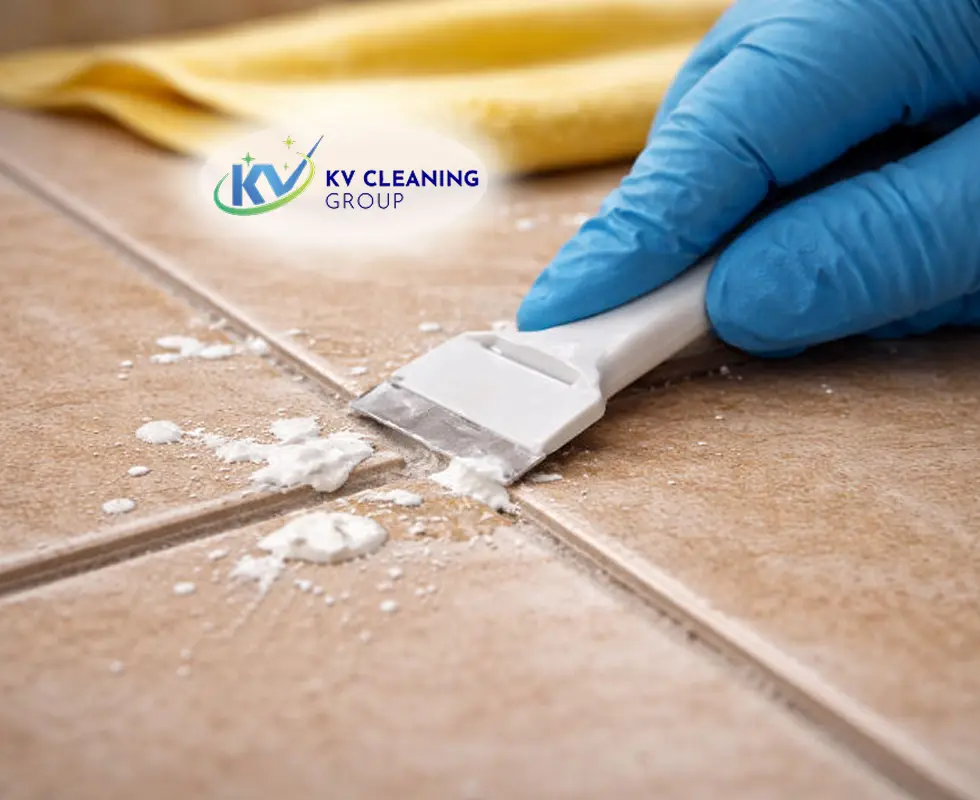
Soil bonded to a hard surface
When dirt has formed a film or deposit, mechanical dry removal may no longer be enough.
The important point is that the liquid should have a purpose.
Do not use it simply because a spray bottle is available.
Is More Liquid Better?
No.
More liquid is not a measurement of better cleaning.
A heavily soaked cloth may:
- Leave excess moisture behind
- Increase drying time
- Spread contamination
- Create streaks
- Leave residue
- Affect sensitive finishes
- Increase the risk of moisture entering joints or porous areas
A controlled damp cloth can often achieve what a soaked cloth cannot.
The same principle applies to mopping.
A floor does not need to be flooded to be cleaned effectively.
The aim is to use enough moisture and cleaning chemistry to perform the required task while controlling the amount left behind.
The 5 Questions to Ask Before Choosing a Cleaning Method
Before selecting dry or liquid cleaning, ask five simple questions.
1. What is the surface?
Identify whether it is:
- Timber
- Laminate
- Tile
- Stone
- Glass
- Stainless steel
- Vinyl
- Carpet
- Upholstery
- Painted surface
- Electronic equipment
- Industrial equipment
The material determines what it can safely tolerate.
2. What is on the surface?
Is the problem:
- Dust?
- Sand?
- Hair?
- Grease?
- Food?
- Liquid residue?
- Mud?
- Mineral deposits?
- Adhesive?
- Staining?
- Organic contamination?
Different soil types respond differently to cleaning methods.
3. Is the contamination loose or bonded?
Loose material is often suitable for dry removal.
Attached contamination may require a damp or wet method.
4. Can the surface tolerate moisture?
Some materials tolerate controlled moisture very well.
Others require much greater care.
5. How quickly must the area be ready again?
Dry methods generally do not create a conventional drying period.
Moisture-based methods may.
This matters in offices, retail stores, schools, healthcare environments and busy commercial properties where an area may need to return to service quickly.
A Practical Dry-to-Wet Cleaning Process
A useful general workflow is:
Step 1: Inspect
Look at the material, soil level, stains, joints, edges, existing damage and previous treatment.
Step 2: Remove loose debris
Vacuum, sweep, brush or dust according to the surface.
Step 3: Reassess
Once dry debris has been removed, determine whether liquid cleaning is still required.
Step 4: Choose the appropriate liquid
Where wet cleaning is necessary, select a product compatible with the surface and use the manufacturer's stated dilution and instructions.
Step 5: Apply in a controlled way
Use the appropriate cloth, mop, applicator or equipment.
Avoid flooding the surface.
Step 6: Remove residue
Where the process requires rinsing or extraction, remove remaining cleaning solution and loosened soil appropriately.
Step 7: Dry
Allow the surface or material to dry under suitable conditions.
Step 8: Inspect again
The final inspection is important.
If a stain remains, determine whether it is still removable contamination or whether the material itself has been permanently affected.
Which Surfaces Usually Need Dry Cleaning First?
Here is a practical comparison:
| Surface | Dry Method | Liquid Method | Main Consideration |
|---|---|---|---|
| Desk | Dusting / vacuuming | Damp wiping | Remove dust before wiping marks |
| Timber furniture | Dry microfibre | Controlled damp cleaning | Avoid excess moisture |
| Glass | Dry dust removal | Glass cleaning solution | Reduce dust before wiping |
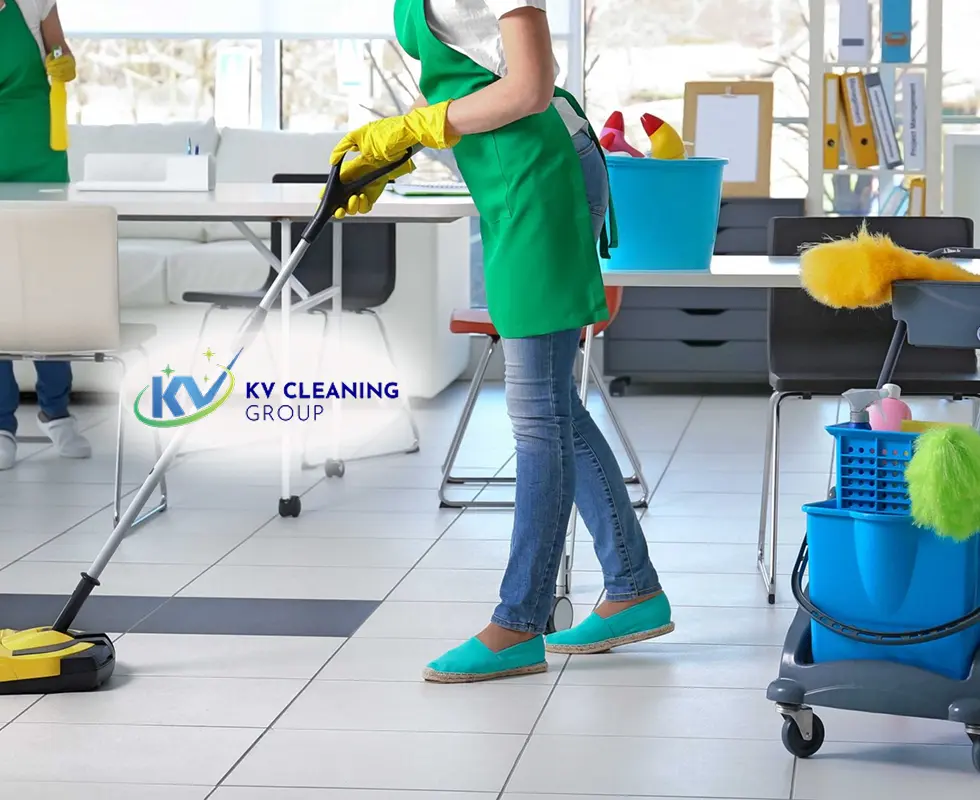
| Hard floors | Sweep / vacuum | Damp mopping | Do not turn loose dirt into slurry |
| Carpet | Vacuuming | Extraction / low-moisture cleaning | Match method to carpet |
| Upholstery | Vacuuming | Suitable moisture-based treatment | Check fabric first |
| Electronics | Dry dust removal | Only when manufacturer permits | Moisture risk |
| Kitchen surfaces | Remove debris | Detergent cleaning | Food and grease may require wet cleaning |
| Bathrooms | Remove loose debris | Wet cleaning and sanitising where required | Hygiene requirements |
| Warehouse floors | Sweep / vacuum | Scrubbing or controlled wet cleaning | Traffic and soil level |
For commercial sites, the right approach can change from one area to another.
A warehouse loading zone may require a different method from an executive office.
A healthcare environment cannot be managed as though it were an ordinary low-traffic room.
Cleaning a Small Room vs a Large Facility
Cleaning method selection becomes more important as site size increases.
Consider an illustrative comparison:
Example A: 20 m² meeting room
Loose dust can often be removed quickly before targeted damp wiping of tables, touchpoints and other surfaces.
Example B: 2,000 m² commercial facility
The cleaning plan may need separate stages for vacuuming, hard-floor cleaning, touchpoint work, washrooms, kitchens, carpeted areas and other zones.
Trying to apply the same liquid-heavy approach across every square metre would not be an efficient cleaning strategy.
KV Cleaning's published company information currently reports 525+ commercial cleaning projects completed, 1.2 million+ square metres cleaned, 43+ trained cleaning professionals and more than 22 years of industry experience. These figures provide useful context for why cleaning method selection has to work at both room and facility scale.
The practical lesson is simple:
The larger the site, the more important method selection, sequence and workflow control become.
Cleaning Methods for Offices
An office normally contains a mixture of surfaces rather than one material.
A typical workplace can include:
- Workstations
- Desks
- Meeting tables
- Screens
- Glass partitions
- Carpet
- Hard floors
- Kitchen surfaces
- Bathrooms
- Reception counters
- Door handles
- Lift buttons
- Shared equipment
That means there is no single “office cleaning method.”
Loose dust may be removed without liquid.
Kitchen residue may require wet cleaning.
Carpets may need a separate maintenance method.
High-touch areas may require cleaning followed by sanitisation or disinfection where the workplace procedure calls for it.
For businesses looking at a broader workplace program, see the dedicated Office Cleaning Sydney service page.
What About Carpet?
Carpet is a good example of why the dry-versus-wet discussion cannot be reduced to one winner.
Routine vacuuming is a dry process that removes loose particles.
A deeper carpet-cleaning process may involve water, cleaning solution and extraction.
A low-moisture method may use substantially less moisture where rapid turnaround is important.
The correct option depends on:
- Carpet construction
- Fibre type
- Soil level
- Stain type
- Traffic
- Moisture sensitivity
- Ventilation
- Drying conditions
- Required return-to-use time
KV's dedicated Carpet Cleaning Sydney service information already covers hot-water extraction, low-moisture cleaning, encapsulation and targeted spot treatment, so this article should not repeat those methods in detail.
Instead, the broader lesson is:
Vacuuming, low-moisture cleaning and moisture-based extraction each have a different role.
What About Commercial Cleaning?
Commercial premises make the comparison even more interesting because multiple cleaning methods may operate within the same property.
For example:
Reception
Dry dust removal followed by controlled surface wiping.
Warehouse
Mechanical removal of loose dust and soil followed by suitable floor cleaning where needed.
Kitchen
Dry removal of loose food particles followed by appropriate wet cleaning and, where required, sanitisation.
Washroom
Routine wet cleaning and hygiene procedures.
Office carpet
Vacuuming for routine soil management and an appropriate periodic carpet-cleaning method.
A professional cleaning program therefore works more like a system than a single technique.
Businesses requiring broader premises maintenance can review KV Cleaning's Commercial Cleaning Sydney service.
Why Cleaning Products Matter
Choosing between dry and liquid cleaning is only part of the decision.
The liquid itself matters.
A cleaning solution should be selected according to:
- Surface compatibility
- Soil type
- Manufacturer instructions
- Required cleaning result
- Dilution requirements
- Contact time where applicable
- Residue concerns
- Workplace safety requirements
A stronger chemical is not automatically a better chemical.
A product that works well on a resilient commercial floor may be completely inappropriate for another material.
This is particularly important when cleaning:
- Natural stone
- Timber
- Painted surfaces
- Special coatings
- Upholstery
- Sensitive equipment
- Medical environments
- Food-contact areas
Water Alone Is Not Always Enough
It is easy to assume that water equals cleaning.
Water can remove some soluble material, but it does not solve every type of soil.
Grease and oily contamination may require suitable detergent chemistry.
Some stains need targeted treatment.
Some surfaces need mechanical action.
Some hygiene situations require a separate sanitising or disinfecting step after cleaning.
The result depends on the combination of:
chemical + mechanical action + time + temperature + moisture control
The precise balance changes according to the task.
Cleaning vs Sanitising vs Disinfecting
These terms should not be treated as interchangeable.
Cleaning
Cleaning removes dirt, soil, residue and other unwanted material from a surface.
Sanitising
Sanitising is a separate process intended to reduce microorganisms to an acceptable level under the relevant application.
Disinfecting
Disinfection uses an appropriate product and application process to destroy specified microorganisms.
A dry wipe can physically remove some contamination, but that does not make it equivalent to a validated disinfection process.
Likewise, simply spraying a disinfectant onto a dirty surface is not a substitute for proper cleaning.
For many food-contact and hygiene-sensitive environments, the cleaning sequence matters.
That is why dry removal, wet cleaning and later hygiene treatment should be considered as separate steps where the applicable procedure requires them.
When Cleaning Without Liquid Is the Better Choice
A no-liquid method may be preferable when:
- The soil is loose
- The surface is moisture-sensitive
- The manufacturer says to avoid liquid
- The area needs an immediate return to use
- Applying liquid would create unnecessary residue
- The contamination can be captured mechanically
- The surface contains electrical components
- Moisture could enter joints or openings
But “no liquid” should not become a rigid rule.
Avoiding moisture simply because it sounds safer can leave behind contamination that actually needs cleaning chemistry or water.
When Liquid Cleaning Is the Better Choice
Liquid cleaning may be more appropriate when:
- Soil is sticky
- Grease is present
- Food residue has adhered
- Drink residue remains
- Finger oils have accumulated
- Surface marks cannot be removed dry
- Hygiene procedures require a wet cleaning stage
- The material safely supports controlled moisture
- A specialised treatment is required
The key is not “wet is better.”
It is:
Use moisture where moisture solves the problem.
What Is Low-Moisture Cleaning?
Low-moisture cleaning sits between completely dry cleaning and conventional wet cleaning.
The objective is to use significantly less moisture while still using a cleaning agent or controlled cleaning process.
It can be useful when:
- Drying time matters
- A property must return to service quickly
- The material is moisture-sensitive
- Routine maintenance is required
- Heavy wet cleaning is unnecessary
Low-moisture cleaning should not be confused with completely dry cleaning.
A method can use very little liquid and still be moisture-based.
KV's existing carpet content already discusses low-moisture methods in the context of commercial carpets, including situations where reduced moisture and shorter drying requirements matter.
Does Dry Cleaning Remove Dust Better?
It depends on the dry tool and the type of dust.
A suitable microfibre cloth or vacuum can physically capture loose particles without introducing moisture.
However, simply moving a dry cloth over a heavily soiled surface is not the same as controlled dust removal.
Some dusting methods can disturb particles and allow them to resettle.
The better question is:
Is the chosen tool capturing the debris or simply moving it?
That is why professional cleaning considers the tool, technique, direction of movement and contamination level rather than relying only on the word “dry.”
Can Dry Cleaning Replace Wet Cleaning?
No.
Dry and wet methods solve different problems.
A dry process can remove loose particles.
A wet process can loosen or remove attached soil.
In many situations the best workflow is:
Dry → Wet where needed → Remove residue → Dry → Inspect
This hybrid approach avoids unnecessary liquid use while still allowing the surface to receive the cleaning it actually needs.
Five Common Mistakes
Mistake 1: Wet-cleaning before removing loose soil
Dust, hair and debris can turn into a wet mess.
Mistake 2: Assuming more liquid means deeper cleaning
Excess moisture can create additional problems without improving the result.
Mistake 3: Using the same product on every surface
Different materials can respond differently to chemicals.
Mistake 4: Treating cleaning and disinfection as the same task
Cleaning removes soil. Disinfection is a separate process with specific product and application requirements.
Mistake 5: Ignoring drying
Moisture-based cleaning is not finished when the surface looks clean.
Drying and final inspection are part of the process.
A Simple Decision Guide
Use this quick rule:
Choose a dry method when:
The soil is loose + the surface is suitable + no liquid is required.
Choose a damp method when:
The surface needs controlled wiping + light residue is present + moisture is safe.
Choose a wet method when:
Soil is adhered + cleaning chemistry is required + the surface and environment can safely support moisture.
Choose low-moisture cleaning when:
You need cleaning performance + moisture needs to be minimised + the chosen method is suitable for the material.
Use a specialised process when:
The contamination, surface or hygiene requirement is beyond routine cleaning.
What About Green Cleaning?
Using less liquid does not automatically mean that a cleaning program is environmentally better.
The environmental impact of a cleaning system can involve:
- Product selection
- Chemical concentration
- Water usage
- Packaging
- Equipment efficiency
- Waste generation
- Reusable materials
- Cleaning frequency
- Process design
The objective should be efficient cleaning rather than simply using the smallest possible amount of water.
For businesses specifically reviewing environmentally responsible cleaning options, KV's Green Cleaning Sydney service explains its approach to eco-conscious products and sustainable cleaning practices.
What About Large Commercial Facilities?
Large facilities need cleaning systems that can be repeated consistently.
A 2,000 m² warehouse cannot be treated like a 20 m² office.
The cleaning team may need to divide the site into zones and assign different methods to:
- Entrances
- Operational floors
- Storage areas
- Offices
- Washrooms
- Staff rooms
- High-touch areas
- Loading zones
- Specialised equipment areas
The more complex the facility, the more important method selection becomes.
KV's Facility Cleaning Sydney service is relevant for organisations that need cleaning planned around the size, use and operational requirements of the property.
A Practical Cleaning Schedule
A simple recurring workflow can look like this:
Daily
Remove loose dust and debris.
Address visible spills promptly.
Clean high-use surfaces according to the agreed routine.
Weekly
Review areas where dry cleaning alone is no longer sufficient.
Carry out more detailed damp or wet cleaning where required.
Inspect corners, edges and less visible areas.
Periodically
Schedule deeper treatments for flooring, carpets, upholstery, glass and other specialist surfaces according to the property's needs.
The exact frequency should be based on traffic, occupancy, contamination and surface condition rather than following one universal timetable.
A Note About Cleaning Chemicals
Never mix cleaning chemicals simply to try to make them stronger.
Use products according to their label and the surface manufacturer's guidance.
For professional products, the relevant safety information should also be available to the people using them.
When in doubt, testing a small inconspicuous area before treating a large surface is a sensible precaution.
Final Verdict: Which Method Works Best?
There is no single winner between cleaning with liquids and cleaning without liquids.
The better method is the one that matches the surface, contamination, moisture tolerance, hygiene requirement and operating conditions.
For many cleaning tasks, the most practical approach is:
Remove loose soil dry.
Use liquid only where the remaining contamination requires it.
Control the amount of moisture.
Remove residue properly.
Allow the surface to dry.
Inspect the result.
That approach is more useful than treating every surface as either “wet clean” or “dry clean.”
A clean result is not created by the amount of water, detergent or effort used.
It comes from choosing the right method for the problem.
Quick Reference Checklist
Before cleaning:
- ☐ Identify the surface
- ☐ Identify the contamination
- ☐ Check manufacturer instructions
- ☐ Decide whether the soil is loose or bonded
- ☐ Consider moisture sensitivity
During cleaning:
- ☐ Remove loose debris first
- ☐ Use the least aggressive suitable method
- ☐ Apply only the required amount of liquid
- ☐ Use a surface-compatible cleaning product
- ☐ Avoid unnecessary saturation
After cleaning:
- ☐ Remove residue
- ☐ Allow adequate drying
- ☐ Inspect the surface
- ☐ Check for remaining staining or damage
- ☐ Review whether the cleaning method needs to change next time
Final Takeaway
Cleaning without liquids and cleaning with liquids are not competing methods that need one permanent winner.
They are two parts of a broader cleaning toolkit.
Dry methods remove what can be removed dry.
Liquid methods address what needs moisture or cleaning chemistry.
Good cleaning uses each method for the job it is actually suited to.
That is why the most reliable question is not:
“Should I clean wet or dry?”
It is:
“What is on the surface, what is the surface made of, and what is the safest effective way to remove it?”