Commercial Cleaning Service

Home Commercial Cleaning

Commercial Cleaning Sydney

Commercial Cleaning Services Sydney for business premises and commercial properties

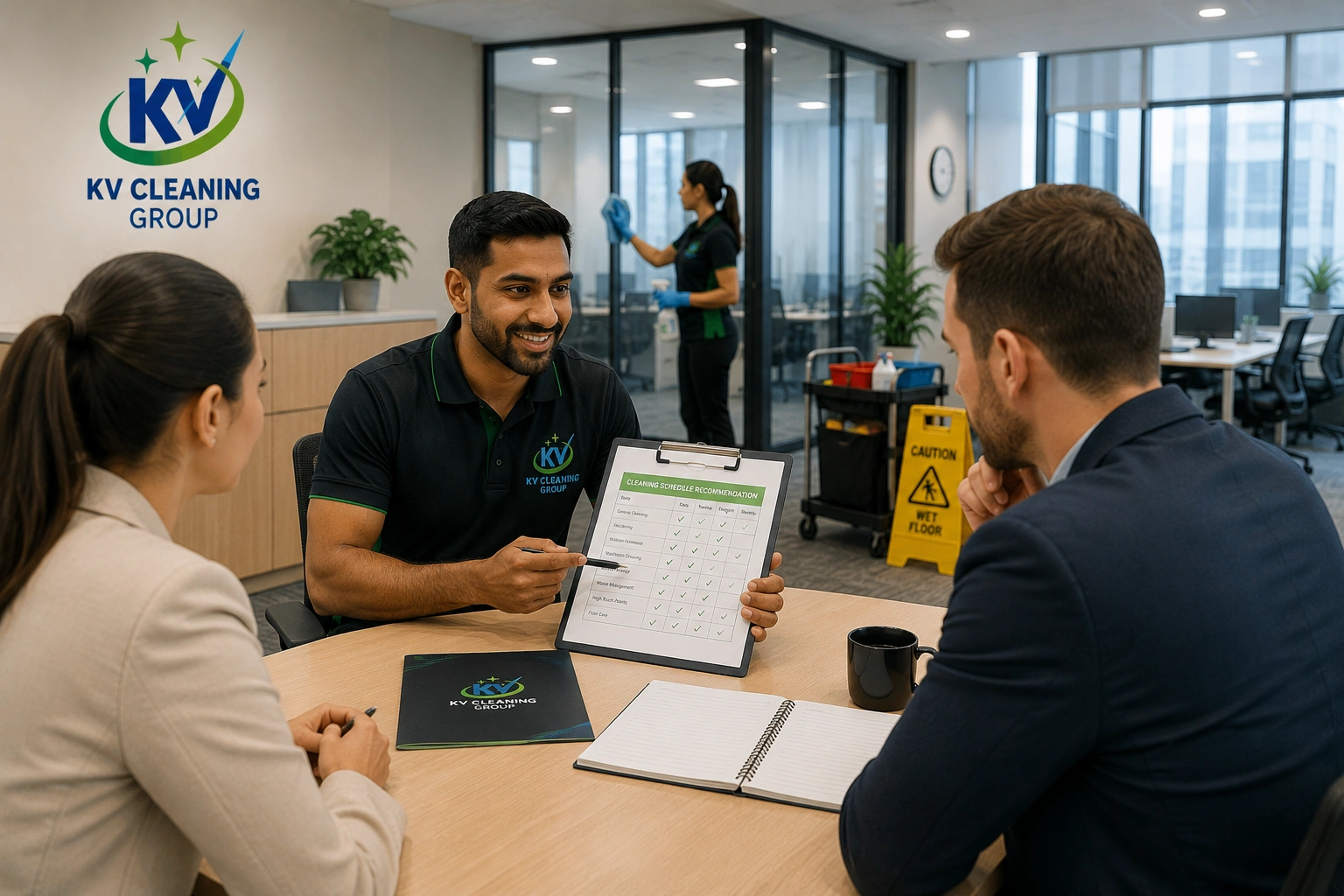
Before agreeing to a cleaning service, map the work to the spaces inside the building. A customer entrance, shared kitchen, washroom, storage room and production area are used differently and may need different visit frequencies. A useful plan identifies the area, the task and the timing instead of applying one checklist to every site.

KV Cleaning Group provides commercial cleaning in Sydney around the agreed areas, visit frequency, access arrangements and operating hours. We help clarify which tasks belong on every visit, which work is periodic, and whether any surfaces, restricted zones or hygiene procedures call for a particular method. This makes the proposed scope easier to review before service starts.

Businesses comparing business premises cleaning in Sydney or commercial property cleaning in Sydney should look beyond the service label. Ask for the areas included, the tasks planned for each visit, any exclusions, who will manage access and how a missed task or changed requirement will be handled. These details help you compare quotations on a like-for-like basis.

KV Cleaning Group reports 22+ years of industry experience, 525+ commercial cleaning projects, 126+ businesses served annually, 1.2M+ square metres cleaned and 43+ trained cleaning professionals. These figures are published by the company and should be treated as company-reported information. For a specific contract, ask which team will attend, who supervises the work and what site records or compliance documents can be provided.
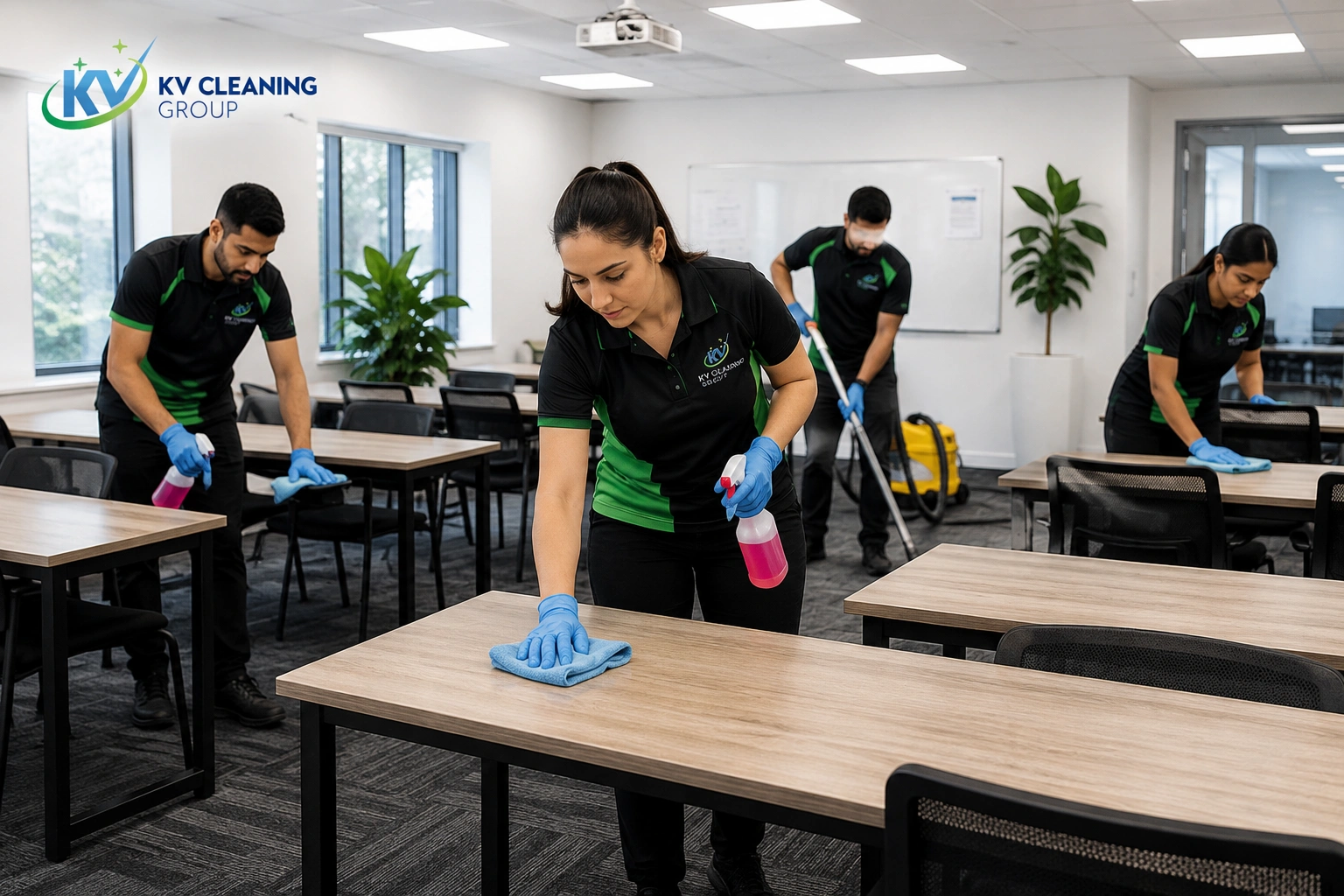
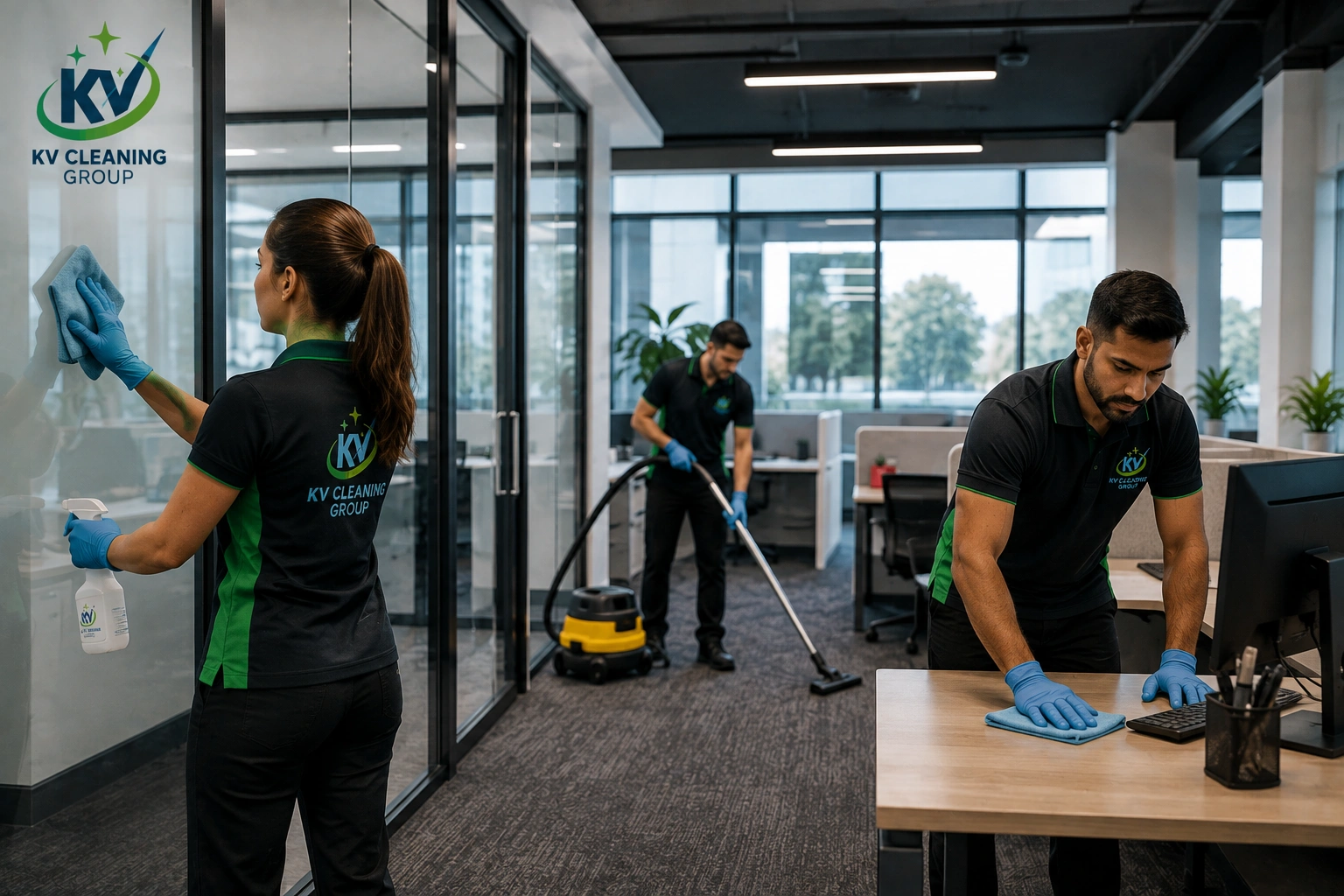
Commercial cleaning services for business premises in Sydney by KV Cleaning Group

Plan the Work Around the Type of Commercial Premises

The layout and daily activity determine which tasks matter most

A compact tenancy with a few rooms does not create the same cleaning workload as a busy customer area or a site with operational zones. Foot traffic, grease, dust, washrooms, access restrictions and shift patterns each affect the order of work, equipment choice and visit length. Identifying these conditions at the start makes the proposed scope more useful.

Use the specialist service pages below when you need the details for one environment. This page explains how the overall cleaning arrangement is planned; it does not replace the specific methods or site requirements for each type of facility.

01 Office & Professional Workplaces

Reception, meeting rooms, kitchens and shared amenities may need their own checklist and timing. See our office cleaning scope for office-specific details.

02 Retail & Customer-Facing Sites

Entrances, customer routes, counters and amenities often need attention based on opening hours, sales activity and visible marks. The agreed scope should separate routine tasks from occasional detail work.

03 Warehouse & Logistics Areas

Large floors, loading areas, pedestrian routes and staff amenities may need different equipment and access coordination. See our warehouse cleaning details for this setting.

04 Industrial Workplaces

Dust, residues, equipment zones and safety access rules can affect the sequence and product selection. Review our industrial cleaning scope when the site includes operational or production areas.

05 Medical & Care Environments

Room use, touchpoints, approved procedures and facility rules need to guide the work. Our medical centre cleaning page explains the separate considerations for clinical settings.

06 Strata & Shared Commercial Areas

Lobbies, corridors, lifts and shared amenities rely on clear responsibilities and a frequency suited to building use. See our strata cleaning scope for common-property requirements.

A useful cleaning scope describes the areas, frequency, method and expected standard—not just the name of the building.

What Should a Commercial Cleaning Scope Cover?

Agree on the tasks before comparing quotations

A quote is easier to assess when it lists the spaces included and the work expected in each one. “General cleaning” can mean different things to different providers. Ask which tasks happen every visit, which happen weekly or periodically, what consumables are included and which jobs would require a separate quote.

Depending on the site, the cleaning scope may include: ask the provider to mark which items are included on every visit, which are periodic, and which require a separate quote.

  • Entrances, reception areas and accessible entry points
  • Work areas, common spaces and shared rooms
  • Kitchenettes, break rooms and staff facilities
  • Bathrooms, amenities and frequently touched fixtures
  • Vacuuming, sweeping and mopping of appropriate floor surfaces
  • Dust removal from accessible furniture, ledges and surfaces
  • Internal glass, doors and selected partitions
  • Bins, waste points and agreed waste-handling tasks
  • High-use areas requiring more regular attention
  • Periodic or additional tasks included in the agreed programme

Some work belongs on a recurring schedule; other tasks make more sense periodically. For example, routine floor maintenance may happen frequently while detailed high-level dusting, deeper floor treatment or selected glass work is scheduled less often.

Professional commercial cleaning services in Sydney

How Floor Area Affects Time and Equipment

Use square metres as a starting point, not a quote by itself

Floor area is useful for planning, but it cannot produce a reliable cleaning quote by itself. Two properties with the same area may require different amounts of work because of room layout, bathroom count, furniture, public traffic, surface type, access constraints and how often each space is used.

The sizes below are illustrative planning examples—not industry statistics, measured case studies, fixed service bands or prices. Use them to explain the scale of a site during an enquiry, then confirm the actual scope from the rooms, floor types, traffic, access and tasks involved.

80 m² Compact Office

Often a smaller number of rooms and amenities, with the cleaning scope concentrated on the spaces used each day.

250 m² Professional Workplace

May include several work areas, meeting spaces, a kitchen or staff area, washrooms and shared circulation space.

500 m² Larger Workplace or Retail Site

More floor area and more points of activity can increase travel time, routine tasks and the need for staged cleaning.

1,000 m² Large Commercial Premises

The plan may need clearer task zoning, equipment planning, access coordination and a more detailed recurring scope.

2,000+ m² Warehouse or Large Facility

Operational areas, larger floors, amenities, shift patterns and access controls can significantly change the cleaning sequence.

Multi-site Several Locations

Each site may have its own scope while the business benefits from a consistent way of reviewing schedules and requirements.

Property size tells us how much space there is. Property use tells us what needs to happen in that space.

Choosing a Cleaning Frequency That Fits Operations

Schedule by area, activity and the result you need to maintain

Cleaning frequency should follow the way a site is used rather than an arbitrary daily or weekly rule. An entrance exposed to outside dirt, a shared washroom and a low-traffic store room can need different visit patterns even when they are in the same building. Agree which areas must be refreshed every visit and which can be handled periodically.

🌅

Before Opening

Useful where the property needs to be ready before staff, customers or visitors arrive.

🌙

After Closing

Suitable for businesses that want routine cleaning completed after normal daily activity.

⏳

Quieter Periods

Cleaning can sometimes be placed into lower-traffic periods to reduce interference with customers or staff.

🔄

Recurring Visits

Daily, weekly, fortnightly, monthly or another agreed pattern can be considered based on the required scope.

Frequency can also change by area. Reception, bathrooms, kitchens, high-touch points and heavily used floors may require more frequent attention than low-traffic rooms or less-used storage areas.

A workable cleaning schedule should fit business operations rather than become another interruption to them.

🛠️ Cleaning Methods & Products

Cleaning Products, Liquids and Surface Care

The product should match the soil, surface and task

Different materials need different treatment. Glass, carpet, sealed concrete, vinyl, ceramic tile, stainless steel, laminate and painted surfaces can respond differently to moisture, abrasion and chemicals. Before applying a product, identify the surface and check the label or care guidance; an unsuitable cleaner can leave residue, dull a finish or damage a coating.

Loose dust and dry debris can often be removed with vacuuming or another dry method. Finger marks or attached soil may need controlled damp wiping. Depending on the surface and job, product categories can include a neutral or surface-compatible floor cleaner, glass cleaner, general-purpose surface cleaner, washroom cleaner, a suitable degreaser for grease deposits, or a disinfectant where the task and facility procedure call for it. These are examples of product types, not a claim that one formula suits every KV Cleaning site.

Use the labelled dilution and contact time where relevant, keep liquids away from electrical equipment, and avoid over-wetting floors or sensitive finishes. Never mix cleaning chemicals. Where a site has specific hygiene, WHS or infection-control requirements, the method should follow the property's approved procedure and the product instructions.

When a hazardous chemical is used at work, its safety information should be available to the people handling it. Safe Work Australia’s guidance on safety data sheets explains the role of SDS documents in communicating chemical hazards and safe handling information.

🧹

Dry Soil Removal

Vacuuming, dust removal and other mechanical methods can reduce loose soil without unnecessary liquid.

💧

Controlled Damp Cleaning

Useful for surfaces where attached soil needs moisture and wiping while keeping liquid under control.

🧴

Task-Suitable Products

Examples include a surface-compatible floor solution, glass cleaner, general-purpose cleaner or washroom product; a degreaser or disinfectant is used only where the task and product directions support it.

⚙️

Commercial Equipment

Equipment should match the property and the work involved, particularly for larger floor areas and periodic tasks.

How to Review Cleaning Quality Over Time

Use the agreed scope to spot recurring issues

One good visit does not show whether a recurring arrangement is working consistently. A practical review compares completed work with the agreed checklist, notes repeat problem areas, records feedback and gives the site contact a straightforward way to report missed tasks or changing needs.

KV Cleaning Group describes quality checks and service reviews as part of its approach. Before a contract begins, confirm what will actually apply to your site: who reviews completed work, where concerns should be raised, how follow-up is recorded and how changes to the scope are approved.

  • Review the agreed scope and priority areas
  • Check completed routine cleaning work
  • Follow up on recurring issues or missed areas
  • Review customer feedback and requested changes
  • Adjust the service when the property or operating pattern changes
  • Keep communication clear about additional or periodic requirements

This gives the cleaning programme a practical feedback loop instead of treating every visit as an isolated job.

Commercial cleaning quality checks at a Sydney property

Experience and Information to Check Before You Engage a Provider

Company-reported figures and practical contract questions

Choosing a provider involves more than comparing the quoted total. Ask who will manage the site, how the task list is recorded, what happens when a visit is missed and which insurance or safety documents your building requires. KV Cleaning Group publishes the following operating figures; confirm the supporting records and contract-specific details relevant to your procurement process:

22+ Years Of Experience

More than two decades of cleaning industry experience.

525+ Commercial Projects

More than 525 completed commercial cleaning projects.

126+ Businesses Served Annually

More than 126 businesses served each year.

1.2M+ Square Metres Cleaned

More than 1.2 million square metres cleaned.

43+ Trained Professionals

A cleaning team of more than 43 trained professionals.

98% Client Retention

A published 98% client retention figure.

For a site with formal procurement or building-management requirements, request current evidence for the items relevant to the contract, such as public liability insurance, risk assessments, safe work procedures, training records or site-specific checks. Do not assume every document or service condition applies to every engagement; confirm the details before work starts.

What Affects the Cost of Commercial Cleaning?

Compare the work included, not just the headline price

A useful quotation reflects the areas to clean, the tasks required and how often they must be completed. Access, layout, washrooms, kitchen areas, foot traffic, service timing and periodic work can all affect the workload. Ask each provider to price a comparable written scope so you can identify what is included rather than comparing totals alone.

Useful cost factors include:

📐Property size
🚻Number of amenities
📅Cleaning frequency
🚶Foot traffic
📍Areas included
⏰Service hours
🚪Access requirements
➕Periodic or specialist work

From Site Details to an Agreed Cleaning Plan

What to prepare before requesting a quotation

You do not need a lengthy tender document to make a useful first enquiry. Approximate floor area, property type, a list of rooms, preferred visit times and known access restrictions give the cleaning provider a better starting point. If drawings or an existing scope are available, they can help make the discussion more specific.

01

Share the Property Details

Share the suburb, approximate floor area, type of premises, main rooms or zones, preferred frequency and any access restrictions.

02

Discuss the Scope and Schedule

Discuss operating hours, security or key access, busy periods, floor types, washrooms, kitchens and any periodic tasks that need to be included.

03

Confirm the Cleaning Arrangement

Confirm the included areas, task frequency, service window, reporting contact, exclusions and how extra work will be approved before the first visit.

The more clearly the property is understood, the more useful the proposed cleaning arrangement becomes.

Check Service Coverage for Your Sydney Property

Location, access and contract size can affect availability

KV Cleaning Group lists service coverage across Sydney and surrounding business areas. Availability can depend on the suburb, property type, access window and size of the proposed contract, so confirm that your address and requirements can be accommodated before planning a start date.

Areas mentioned in the current coverage include Sydney CBD, Parramatta, Blacktown, North Sydney, Chatswood, Liverpool, Randwick, Mascot, Bankstown, Penrith, Campbelltown and Strathfield. The actual service boundary should be checked for each enquiry.

For multiple locations, share each address and the key differences between sites. You can check the current directory of Sydney service areas before enquiring; individual availability should still be confirmed.

KV Cleaning commercial cleaning team servicing Sydney

Questions to Ask Before Booking Commercial Cleaning

What is included in Commercial Cleaning Sydney?+

Depending on the site, the scope may cover entrances, reception, work areas, shared rooms, kitchens, washrooms, floors, accessible surfaces, internal glass and waste points. Confirm the areas, tasks per visit, frequency, periodic work and exclusions in writing before service begins.

How does property size affect commercial cleaning?+

Floor area is one planning factor. Layout, room count, amenities, occupancy, soil type, access and the task list also affect the work. The 80 m², 250 m², 500 m², 1,000 m² and 2,000+ m² examples on this page are illustrative only, not industry averages or fixed price bands.

Can commercial cleaning be scheduled outside business hours?+

Cleaning times can be discussed around opening hours, building access and busy periods. Confirm whether the preferred time is available for the property and whether security, alarm or sign-in procedures need to be followed.

What cleaning liquids and products are used?+

Depending on the material and task, product types can include floor cleaner, glass cleaner, general surface cleaner, washroom cleaner, a suitable degreaser or disinfectant. These are examples, not a single product list for every site. Follow the label and safety information, use the correct dilution and never mix chemicals.

Do you provide recurring commercial cleaning?+

Yes. Recurring cleaning can be arranged at an agreed frequency based on property use, cleaning priorities, operating hours and service scope.

How is a commercial cleaning quote prepared?+

Share the address or suburb, approximate floor area, property type, areas to be cleaned, preferred frequency, possible service times, access arrangements and any specific site procedures. An existing cleaning checklist or floor plan can also be useful.

Which Sydney areas can you service?+

The company lists coverage across Sydney and surrounding areas, but the specific address, property type and required schedule should be confirmed with the team before a quote or start date is agreed.

Discuss a Cleaning Plan for Your Premises

Share the details that affect the scope

Share the suburb, approximate floor area, type of premises, rooms or zones to include, preferred frequency and suitable service times. It also helps to mention access rules, high-traffic areas, surface concerns and any tasks that should be scheduled separately.

Before the first visit, confirm the written scope, service window, site contact, access process, exclusions and the method for raising or approving changes. Clear expectations help both sides understand how the arrangement is meant to work.

If your organisation requires insurance certificates, training records, risk assessments or site-specific safety procedures, mention those needs in the enquiry so the relevant documents can be confirmed before work begins.

A defined scope, suitable methods and a schedule that fits the premises.

KV Cleaning commercial cleaning team in Sydney

Get in Touch

Why Hire KV Cleaning?

KV Cleaning Group provides reliable commercial cleaning services for offices, warehouses, retail spaces, medical facilities and other workplaces across Sydney.

Our team works around your site requirements, cleaning schedule and access needs to help maintain a clean, safe and professional workplace. Contact us to discuss the right cleaning solution for your business.

Contact KV Cleaning Group

Phone Number +61 485 961 400

Get a Free Cleaning Quote