

A business in Leichhardt NSW 2040 may need a different cleaning routine from a workplace elsewhere in Sydney. A Norton Street shop can accumulate marks around the entrance and customer areas, while an office near Parramatta Road may need meeting rooms, shared kitchens and amenities ready before staff arrive.
KV Cleaning Group can discuss commercial cleaning services in Leichhardt for suitable offices, retail premises, professional suites and shared commercial facilities. The task list can cover agreed work surfaces, floors, washrooms, staff areas, internal glass and waste points, depending on the building and service scope.
Leichhardt combines independent retailers, cafés, restaurants, professional services and office premises. Cleaning plans should account for service hours, food or delivery activity where relevant, customer foot traffic, shared access and the difference between public-facing rooms and staff-only areas.
When requesting a quote, share the approximate floor area, number of rooms and washrooms, floor types, preferred service window, visit frequency and any recurring issues. A floor plan or current photos can help explain the layout. The agreed scope should reflect the work required, not just the size of the premises.
Get Free Quote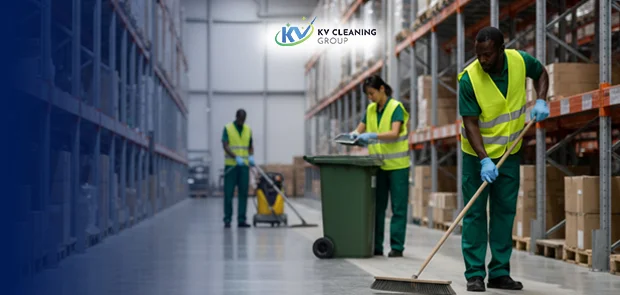
A practical commercial cleaning plan defines which rooms are included, what happens on each visit and which jobs are periodic. For a Leichhardt workplace, that might mean preparing a reception and meeting rooms before staff arrive, maintaining a retail entrance during a trading schedule, or keeping shared amenities on a clear routine. A 90 m² office, a 350 m² retail tenancy and a 1,500 m² multi-zone site are illustrative planning examples—not local size averages, fixed labour estimates or guaranteed service limits.
From small professional suites to hospitality venues and multi-room workplaces, Leichhardt businesses use their premises in different ways. The scope below is a practical discussion guide; the actual tasks should be confirmed after reviewing the site and its operating conditions.
For workplace-specific requirements, see the office cleaning service.
For an office, the most useful checklist is usually room-based. It can cover agreed desk and meeting-room surfaces, reception, shared kitchens, washrooms, bins and floor care. Areas used by visitors may need a different frequency from rooms used only occasionally, while screens, personal paperwork and equipment should be handled only under agreed site instructions.
For workplace-specific requirements, the dedicated office cleaning service provides a broader service scope.
Retail and customer-facing premises need a schedule that respects opening times, stock movement and customer access. Depending on the agreed scope, the routine may include entrance floors, visible glass, counters, customer areas, staff amenities and waste points. Wet-floor work should be timed and signposted so customers and staff can move safely.
For larger storage and logistics environments, see the warehouse cleaning service.
Back-of-house rooms are easy to overlook because customers rarely see them, yet dust, packaging debris and waste can accumulate around storage, staff rooms and service corridors. Identify the zones that belong in the regular routine and confirm whether equipment, stock or restricted areas must be left untouched. Specialist or elevated work should be assessed separately.
Larger storage and logistics properties can require a more detailed warehouse-specific scope.
For dedicated healthcare requirements, see the medical centre cleaning service.
Healthcare and appointment-based premises need a scope that follows the facility's own cleaning and infection-control procedures. Reception, waiting rooms, staff amenities and agreed touchpoints may form part of a general routine, but clinical rooms, instruments, regulated waste and specialist disinfection must be handled only where the provider is equipped and contracted to do so.
Specialist healthcare cleaning requirements should be defined around the facility's own procedures and scope.
The right frequency depends on how quickly the premises gets dirty and how it must look when people arrive. A reception used by visitors throughout the day may need more frequent attention than a small back office, while shared washrooms and food areas need a schedule suited to their actual use.
Often suitable for busy customer-facing premises, shared facilities, high-traffic workplaces and properties where presentation changes quickly.
Can suit active offices and workplaces that need frequent attention while some lower-use areas remain on a different routine.
May suit lower-traffic premises where the building team handles some day-to-day housekeeping between professional visits.
Useful for tasks such as detailed floor work, build-up removal, selected high-level cleaning or other work that does not need to happen every visit.
Review the schedule when the business changes its opening hours, expands its team, renovates, adds a room or notices that high-use areas are no longer meeting the expected standard. This is more useful than selecting a frequency from floor area alone.
Floor area is a starting point, not a productivity promise. A 300 m² open-plan office may have fewer individual rooms than a 300 m² tenancy divided into consulting rooms, meeting spaces and amenities. Furniture density, floor material, access, visitor traffic and the required finish all affect the work plan.
A small office or administration suite may need a focused routine for reception, desks, floors, a kitchenette and washroom surfaces.
A combined office-and-staff area can require separate attention to workrooms, meeting rooms, amenities, entries and shared walkways.
A larger workplace may benefit from zones for office frontage, main floor routes, staff facilities and high-use shared areas.
A multi-zone facility can require coordinated equipment, an agreed route sequence and separate recurring and periodic tasks.
A large operational site needs a site-specific assessment of floor materials, traffic management, access windows and equipment. This is a planning band, not a claim about typical Leichhardt sites.
These are planning ranges rather than fixed labour hours or price bands. The actual quotation should reflect the Leichhardt property, the areas included and the cleaning standard required.
For specialist glass and external window work, see the window cleaning service.
Choosing a cleaning liquid starts with identifying the surface and the soil. A product suitable for sealed vinyl may not be appropriate for natural stone, coated timber or a delicate finish. The goal is to remove the soil without leaving residue, damaging the surface or creating an avoidable slip risk.
May suit routine cleaning of compatible sealed floors where a low-residue result is required. Confirm the floor finish before use.
Used on compatible glass, mirrors and hard surfaces where the product instructions support the material and finish.
Selected for the specific fixture and soil, such as soap residue or mineral deposits. Do not use an acidic product on an incompatible surface.
May be appropriate for compatible oily or greasy soil in a defined work area. Check surface compatibility and keep the product away from incompatible materials.
Use when the task requires disinfection, following the label for dilution, surface suitability and contact time. Disinfection should not be claimed from routine cleaning alone.
Where suitable products are available, consider their cleaning performance and manufacturer guidance rather than making unsupported environmental claims.
Use each liquid according to its label, dilution instructions and required contact time, and keep the relevant safety data sheet accessible. Never mix incompatible chemicals. For stone, coated flooring, painted finishes or stainless steel, confirm compatibility first and test a discreet area where appropriate. If a task requires disinfection, the product and method must meet that task's requirements; routine cleaning alone should not be described as disinfection.
Commercial properties can contain carpet, tile, vinyl, concrete, glass, stainless steel and painted finishes. The cleaning method should change with the material and the type of contamination.
Removes loose dust and debris from carpet and suitable hard-floor areas before more detailed cleaning.
Suitable for compatible hard floors when the correct solution, equipment and technique are used.
Can improve productivity on suitable larger hard-floor areas where mechanical cleaning is appropriate.
May suit surfaces where reduced moisture and faster drying are important and the material allows the method.
Individual marks can be treated with a compatible product instead of applying a stronger chemical to a whole area.
Adds time for detailed work that should not necessarily be repeated during every regular visit.
Specialist glass and exterior window work can be added where the property requires it.
Local context helps identify the property, but a useful cleaning plan still starts with the building itself: its layout, surface types, busy periods and the tasks that staff or visitors notice most.
Leichhardt is part of Sydney’s Inner West, with a mix of local retail, hospitality, professional services and commercial premises. Leichhardt’s Inner West setting includes hospitality and retail strips as well as offices and service businesses. For some premises, the priority may be tracked-in dirt at the entrance; for others, it may be washroom upkeep, kitchen residue, meeting-room presentation or cleaning around deliveries. The final scope should be based on a walk-through or a clear description of the premises. Read Inner West Council’s Leichhardt precinct information.
For a building with deliveries, shared loading areas, food-service operations or restricted rooms, confirm access and site procedures with the manager before work begins. The written scope should show which areas are included, which items the client must move or secure, and which specialist tasks need a separate arrangement.
To strengthen local trust, add a genuine Leichhardt case study when one is available: property type, approximate floor area, the problem identified, method used, time on site and the result confirmed by the customer. Use original site photos only with permission. Do not describe a hypothetical example as completed local work.
For site-specific production and workshop requirements, see the industrial cleaning service.
A written task sequence helps when a building has different use zones or when cleaning must fit around staff, deliveries, tenants and public access. It also gives the site contact a clear way to identify missed tasks or request a change to the scope.
A written scope becomes especially useful when several people manage the property or different zones have different access conditions.
Experience figures help explain the wider business, while a site-specific scope shows what your own property needs. Company-wide figures do not guarantee a particular result, staffing level or cleaning time at an individual site.
KV Cleaning Group states that the business has been serving commercial cleaning needs since 2004.
Published company information records more than 525 commercial cleaning projects.
Published company information records more than 126 businesses served annually.
Published company information records more than 1.2 million square metres cleaned across the wider operation.
Published company information records more than 43 trained cleaning professionals.
Published company information states a 98% client retention rate.
These are company-level figures published by KV Cleaning Group. The actual service arrangement depends on the property, scope, frequency and access requirements agreed with the customer.
Choose a cleaning scope by matching each task to the space it serves. Routine office cleaning, warehouse floor care, medical-centre requirements, internal or external glass, and industrial cleaning may involve different methods and safety considerations. If you manage premises across Sydney as well as Leichhardt, review our broader commercial cleaning services in Sydney. For this page, the focus remains on planning suitable cleaning for a Leichhardt property.
For the broader Sydney service scope, ask us to confirm the right coverage and scope for your property.
The suburb alone does not determine the price. When comparing a commercial cleaning quote, look at the rooms included, frequency, service window, consumables, access requirements and any periodic tasks. Two Leichhardt premises with the same floor area can need different work because one may be open-plan while the other has multiple rooms, customer traffic or food-related residue.
Common factors include floor area, layout, room count, bathrooms, kitchens, flooring, furniture density, occupancy, foot traffic, cleaning frequency, service timing, access, waste areas and any specialist or periodic tasks.
Consider two hypothetical 350 m² premises: one is an office with carpeted rooms, meeting spaces and a kitchenette; the other is a retail tenancy with hard floors, display glass and customer traffic. The square metres are the same, but the tasks, equipment and visit timing may differ. These examples are not local averages, standard prices or guaranteed labour hours. Ask for the scope and exclusions in writing before comparing quotes.
The best starting point is a clear description of the property and the result you need from the cleaning routine.
The primary focus is Leichhardt NSW 2040. Availability in nearby Inner West suburbs must be confirmed for the exact address, access arrangements and preferred schedule.
Contact KV Cleaning to confirm current availability for your exact property and cleaning requirements.
Tell us whether you manage an office, shop, café, professional suite or shared commercial property in Leichhardt. Include the approximate floor area, rooms and amenities, flooring type and the times the building can be accessed.
Mention the problems you want the routine to solve—such as greasy marks near a staff kitchenette, dust in meeting rooms, fingerprints on shopfront glass, washroom upkeep or floors that look tired by opening time.
Call to Discuss Your Cleaning NeedsAnswers to common questions about commercial cleaning services in Leichhardt NSW 2040.
Dependable commercial cleaning services for businesses and facilities throughout Leichhardt, NSW 2040.
KV Cleaning Group provides dependable commercial cleaning services throughout Leichhardt, NSW 2040, helping businesses maintain clean, hygienic and welcoming workplaces. We cater to corporate offices, retail stores, shopping centres, medical practices, educational facilities, childcare centres, restaurants, hospitality venues, fitness centres and strata-managed buildings. Our cleaning plans are tailored to each property's requirements, daily activities and operating schedule.
Our local service-area references include Norton Street, Parramatta Road, Marion Street, Balmain Road, Lords Road, Flood Street, Elswick Street, Piper Street, Allen Street and the surrounding commercial precincts. Key local landmarks include MarketPlace Leichhardt, Leichhardt railway station, Leichhardt Bus/Rail Interchange, Leichhardt Library, Pioneers Memorial Park and the surrounding business district. These locations help identify the major commercial areas in and around Leichhardt for businesses seeking professional cleaning services.
From regular office cleaning and retail floor care to washroom sanitation, kitchen cleaning, common-area maintenance, touchpoint disinfection and scheduled deep cleaning, KV Cleaning Group offers flexible cleaning programmes for different commercial environments. We focus on consistent cleaning standards, attention to detail and service arrangements that help Leichhardt businesses provide clean and professional spaces for employees, customers and visitors.
KV Cleaning Group provides reliable commercial cleaning services for offices, warehouses, retail spaces, medical facilities and other workplaces across Sydney.
Our team works around your site requirements, cleaning schedule and access needs to help maintain a clean, safe and professional workplace. Contact us to discuss the right cleaning solution for your business.