

Rainy weather making your workplace floors messy? Here's how to manage it
Rainy weather making your workplace floors messy? Here's how to manage it
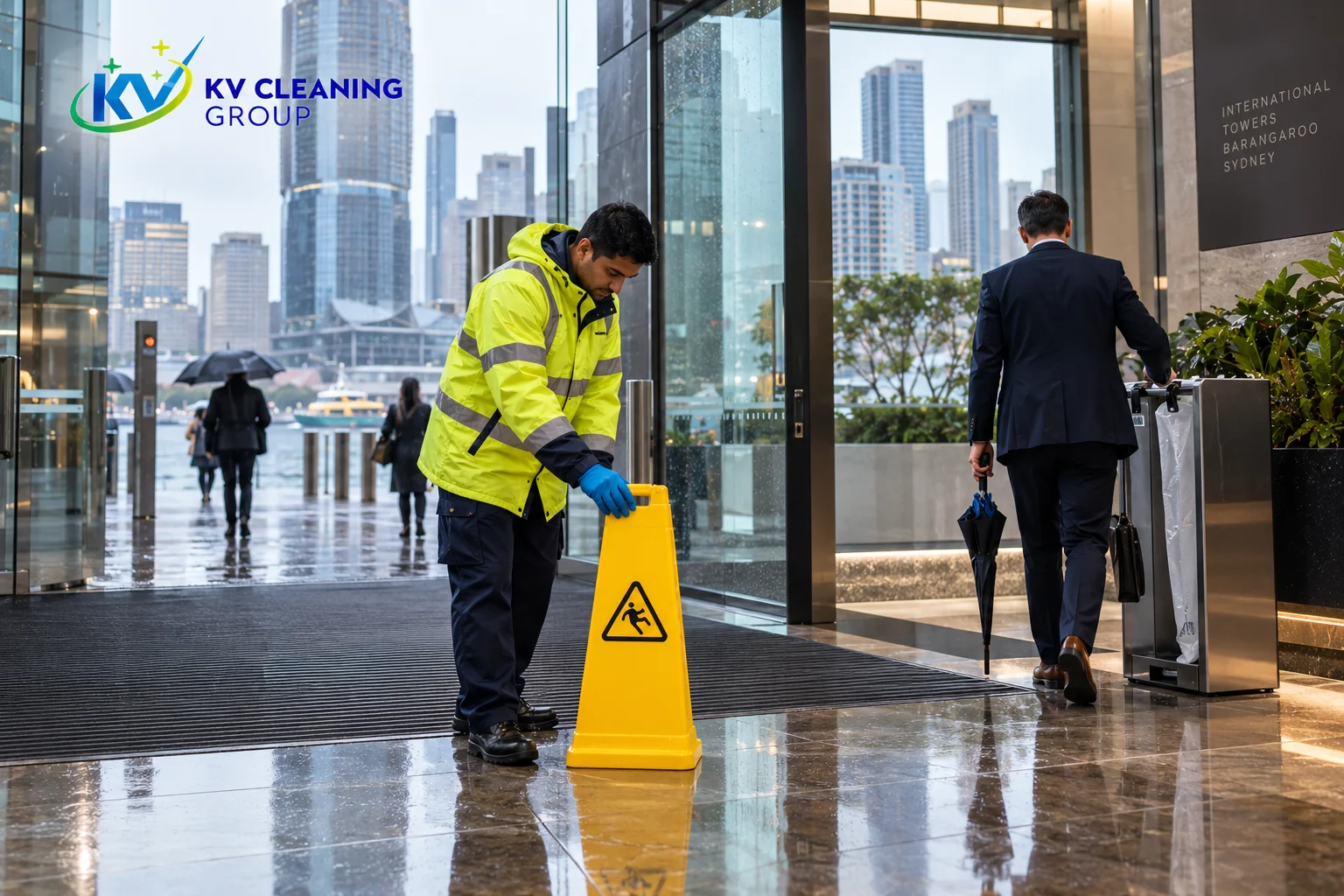
Rain can turn a clean workplace entrance into a maintenance problem within a short time. Water comes in on shoes, umbrellas drip near reception, entrance mats become saturated and repeated foot traffic carries moisture further into the building. In busy workplaces, the problem can continue even after the rain outside has eased.
The answer is not simply to mop more often. A better approach is to prepare the entrance before rain arrives, inspect the right areas at the right times, respond to wet patches promptly and review why the same locations keep becoming dirty.
A wet-weather routine works best when cleaning staff, reception teams, facilities managers and site supervisors know what to check and who is responsible for acting on it.
1. Understand where rainwater enters your workplace
Before changing the cleaning schedule, identify how water moves through the building. Different entrances can create different problems, even within the same property.
Start by checking these five areas:
-
Main entrances: Look for water tracked in from footpaths, car parks and outdoor walkways.
-
Reception and waiting areas: Check whether moisture spreads beyond the entrance mat as visitors move through the building.
-
Lift lobbies and corridors: These areas can receive water from people travelling between floors or different building entrances.
-
Staff entrances: Employees may use side doors and access paths that receive less attention than the main entrance.
-
Loading and delivery areas: Rainwater and outdoor contamination can enter with deliveries, equipment and repeated movement between indoor and outdoor work areas.
Do not assume that the largest visible wet patch is the original source. Follow the path from the outside entrance to the affected indoor area and look for where the controls are failing.
For example, a reception floor that becomes wet every morning may not need the same treatment as a loading entrance that becomes contaminated during deliveries. Each location should have a response that fits the activity taking place there.
2. Prepare a rain-ready entrance before the weather changes
Waiting until the floor is already wet puts the cleaning team into reactive mode. A better option is to include a short wet-weather check in the opening or shift-start routine.
Check your entrance mats
Mats can help capture moisture and loose soil before it travels further indoors, but only when they are appropriate for the location and kept in suitable condition.
Check that mats:
-
Lie flat and do not slide when people walk over them.
-
Have edges that do not curl or create a trip hazard.
-
Are large enough for the entrance traffic they are expected to handle.
-
Are not already saturated, heavily soiled or displaced.
-
Can be inspected and maintained without obstructing an accessible route or emergency exit.
Where the layout permits, a suitable coarse-soil mat outside and an absorbent mat inside can provide two stages of protection. The arrangement should suit the building entrance, expected traffic and weather exposure.
A loose rug or an absorbent mat that has become soaked can create another hazard. Follow the workplace's floor-safety procedure and arrange suitable replacement, drying or maintenance when required.
Check what happens outside the door
The condition of the external approach affects how much water and soil enter the building.
Look for standing water, blocked drains, damaged entrance surfaces, overflowing gutters or other maintenance issues that could increase the amount of moisture reaching the doorway. Report defects to the appropriate property or maintenance contact instead of treating repeated water entry as a cleaning issue alone.
For sites around Banksmeadow and Port Botany, this can be particularly relevant where pedestrian access, staff entrances and operational or delivery routes meet. Site managers should assess those routes separately and make sure any temporary cleaning controls are compatible with site procedures.
3. Use a simple wet-weather inspection schedule
Routine inspections are more useful when they happen at predictable points in the working day instead of only after someone reports a dirty floor.
The following is an example operating schedule, not a legally prescribed inspection frequency. Adjust it to reflect traffic, floor conditions, building layout and how quickly water returns.
|
Checkpoint |
What to inspect |
What to do next |
|
Before opening or the first shift |
Entrance mats, external approaches, drains and visible moisture |
Correct minor issues and report maintenance defects |
|
When rain begins |
Main entrance, reception and any exposed access points |
Confirm that mats and response arrangements are ready |
|
During busy arrival or delivery periods |
Wet patches, mat saturation, tracked water and transitions between floor types |
Respond to hazards promptly and increase checks if conditions warrant |
|
After a heavy shower |
Entrances, shared routes and areas where water has travelled |
Identify affected zones and arrange appropriate cleaning or maintenance |
|
After rain eases |
Mat condition, recurring wet spots and external approaches |
Restore the area and record problems that need a longer-term fix |
One person should be responsible for checking each location, and another person should know who to contact if a hazard cannot be corrected immediately.
The inspection interval should become shorter when the conditions warrant it. A quiet office entrance and a heavily used delivery entrance do not necessarily need the same schedule.
4. Respond to wet floors without creating a second problem
Cleaning a wet floor requires attention to both the contamination and the people moving through the area.
If a wet patch presents a slip risk, follow your workplace's hazard-control procedure. Where necessary, isolate the affected section, provide suitable warning signs and use an alternative route that remains safe and accessible. Signs should support hazard controls rather than replace them.
Once the immediate risk is controlled, select a cleaning approach that suits the floor material and amount of contamination.
Avoid adding unnecessary water
More water does not automatically produce a better result. Excess moisture can spread contamination, lengthen drying time and make some floors more slippery.
For routine maintenance, remove loose soil using a suitable method before undertaking any required damp cleaning. Use appropriate equipment and avoid spreading dirty water across the floor.
Choose products for the actual surface
Commercial floors may include vinyl, ceramic tiles, sealed concrete, carpet, natural stone or specialised safety flooring. These materials do not all respond in the same way to moisture and cleaning chemicals.
A suitable floor cleaner should be compatible with the surface. Follow the product label, dilution instructions and any applicable surface-care guidance. Excessive detergent or unsuitable polish can leave residue that affects floor performance.
Do not mix chemicals unless the manufacturer expressly permits it. If a particular floor needs specialist treatment, obtain the relevant instructions before proceeding.
Keep the area controlled until it is safe to use
Do not reopen a wet-cleaned area merely because the visible water has disappeared. Check the surface and follow the site's procedure for confirming that it is safe for normal pedestrian movement.
SafeWork NSW provides guidance on preventing slips, trips and falls in the workplace, including risks associated with wet surfaces, contaminants, unsuitable cleaning methods and loose mats.
5. Adjust the routine to the type of workplace
A useful rain-management plan considers how people, equipment and deliveries move through each building.
Offices and reception areas
Office entrances often experience concentrated traffic when staff and visitors arrive. Reception teams can report visible water entry, while cleaning staff inspect the matting and floor during agreed checkpoints.
The response should concentrate on affected access areas instead of automatically wet-cleaning every office floor. If you manage several work zones or changing occupancy, the wider office cleaning arrangements should account for the times when entrances and shared routes experience the most activity.
Warehouses and logistics facilities
Warehouses may have several access points, including staff doors, loading docks and vehicle entrances. Water entering one location should not automatically be treated as a problem across the entire building.
Map pedestrian routes separately from vehicle movements. Any matting or temporary cleaning equipment must be positioned so it does not obstruct operational routes or introduce new hazards. Coordinate access controls with the site supervisor, especially when deliveries continue during wet weather.
A planned warehouse cleaning routine can help managers assign different checks to office areas, amenities, loading-side access and larger floors.
Industrial and operational workplaces
For operational environments, floor conditions can be affected by more than rain. Dust, oil, grease, packaging debris and process-related contaminants can interact with moisture, making the source of the problem important.
Do not assume that a general-purpose cleaner is suitable for every operational floor. Identify the contaminant, follow the site's procedures and confirm that the equipment and method are appropriate for the area.
Where these risks are part of the normal working environment, the site's industrial cleaning requirements should be coordinated with the relevant operational and safety procedures.
Carpeted entrances and reception areas
Carpet can retain moisture and trapped grit differently from a hard floor. A visibly damp carpet may require a different response from a smooth tile entrance, particularly if moisture has reached the backing or remains trapped below the surface.
Avoid saturating carpet while trying to remove surface soil. Follow suitable care instructions and assess whether professional treatment is needed if recurring moisture, staining or odour persists.
For longer-term maintenance, review the property's commercial carpet cleaning options rather than assuming that routine vacuuming alone will address every wet-weather issue.
6. Give each person a clear responsibility
A wet-weather plan becomes unreliable when everyone assumes someone else is checking the entrance.
A simple responsibility table helps prevent missed tasks.
|
Role |
Suggested responsibility |
|
Reception or front-of-house staff |
Report visible water entry and displaced or saturated mats |
|
Cleaning team |
Inspect assigned areas, address hazards within the agreed procedure and report recurring issues |
|
Facilities or site manager |
Coordinate maintenance, access restrictions and any required changes to the wet-weather plan |
|
Shift supervisor |
Ensure checks are completed during busy periods and arrange follow-up when an issue remains unresolved |
|
All staff |
Follow temporary access controls and report hazards rather than walking past them |
One person can perform more than one role in a small workplace. The essential point is that every task has an owner and a clear process for escalation.
Keep a short inspection record
A simple record can be more useful than a detailed checklist that nobody completes.
Record the date and time, affected location, observed condition, action taken, person responsible and whether a follow-up check was completed. Note repeated problems such as a saturated mat or water entering through the same doorway.
These records help distinguish a one-off wet patch from an ongoing maintenance problem that needs a different solution.
7. Review what happened after the rain
Once conditions settle, review which controls worked and which ones need attention.
Ask these five questions:
-
Which entrance or access point brought in the most water?
-
Were the mats suitable, correctly positioned and maintained?
-
Did the inspection schedule match the busiest periods?
-
Were responsibilities and reporting arrangements clear?
-
Did any floor, drainage or access problem recur?
Look at repeated observations rather than relying on memory. If the same area repeatedly becomes wet, consider whether the layout, matting, maintenance or work schedule needs to change.
This review should not be limited to visible dirt. Check reports of near misses, wet-floor incidents and temporary access problems, following the site's normal reporting process.
A good wet-weather system should help the team identify where contamination starts, respond consistently and prevent the same issue from returning unnecessarily.
A practical wet-weather checklist for workplace managers
Use this seven-point checklist before and during rainy conditions:
-
Inspect entrances, pedestrian approaches and drainage.
-
Confirm mats are suitable, flat, secure and not saturated.
-
Identify high-traffic entrances and assign responsibility for each.
-
Set inspection checkpoints around arrival peaks, shifts and deliveries.
-
Ensure the team knows how to isolate a hazardous area and report defects.
-
Confirm that cleaning products and methods are appropriate for the floor.
-
Review recurring water entry and record maintenance actions after the weather clears.
The checklist should be adjusted to your building's actual hazards and procedures. It is a practical planning aid, not a substitute for a workplace risk assessment or site-specific safety instructions.
Make wet-weather floor care easier to manage
Rainy weather will continue to change the amount of moisture and soil entering a building, but the response does not need to be improvised every time.
The most effective approach combines suitable entrance controls, inspections that reflect actual traffic, clear responsibility, appropriate cleaning methods and a process for reporting recurring defects. This helps teams manage the immediate condition while identifying what needs to change for the next rainy day.
If your workplace needs a broader, planned approach to recurring floor care, shared areas and site-specific cleaning routines, explore KV Cleaning Group's commercial cleaning services in Sydney to discuss the requirements for your premises.
Get Free Quote
Recent Posts
Frequently Asked Questions
Inspect entrance mats, external approaches and drainage, assign responsibility for wet-weather checks, and make sure staff know how to report or isolate a hazard. The exact preparation depends on the property and its traffic.
There is no single interval appropriate for every site. Base inspections on pedestrian traffic, floor conditions, entrance layout and how quickly moisture returns. Busy entrances and loading areas may require more frequent checks than lightly used rooms.
No. Suitable mats can help capture moisture, but they need adequate coverage and regular inspection. Saturated, displaced or loose mats can become hazards, and mats do not address every source of water entry.
Choose a product compatible with the floor material and the type of contamination. Follow manufacturer directions and the site's cleaning procedure, and avoid leaving excess moisture or cleaning residue. Specialist flooring may require specific care instructions.
Record when and where the problem occurs, inspect the outside approach and entry controls, and check whether drainage, matting or traffic routes need attention. Assign a person to follow up on maintenance issues instead of treating every occurrence as a separate cleaning task.